Skip to content

Typewriter timeline in pictures: 1864 to the 1980s

A typewriter timeline in 40 museum pictures: the first machines, index typewriters, the office standard, typeballs and typewriters for other scripts.

6 min read

This typewriter timeline shows how the machine changed, in pictures, from a wooden prototype of 1864 to the electronic typewriters of the 1980s. Every picture comes from a museum, an archive or a collection, and each is credited under its caption.

For the full story in words, with the people, the patents and the arguments about who was first, read the history of the typewriter. To see how the parts inside these machines work, read how a typewriter works.

Before the keyboard settled: 1860s and 1870s

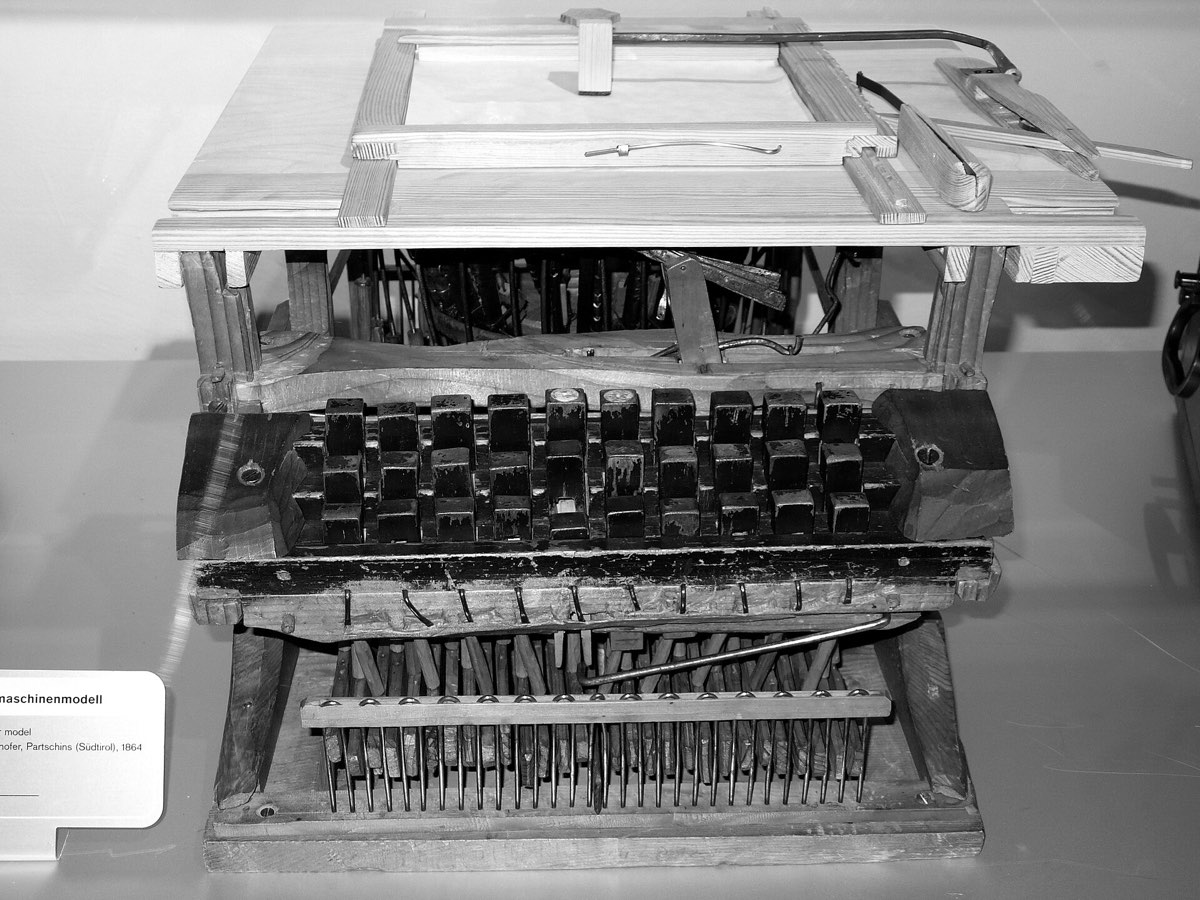
1864: A wooden typewriter built by Peter Mitterhofer

An early wooden typewriter with a ring of type levers, displayed in a museum case
One of the typewriters built by the Tyrolean carpenter Peter Mitterhofer in the 1860s, now in the Technisches Museum in Vienna. Credit: Reinraum, via Wikimedia Commons, Public domain.

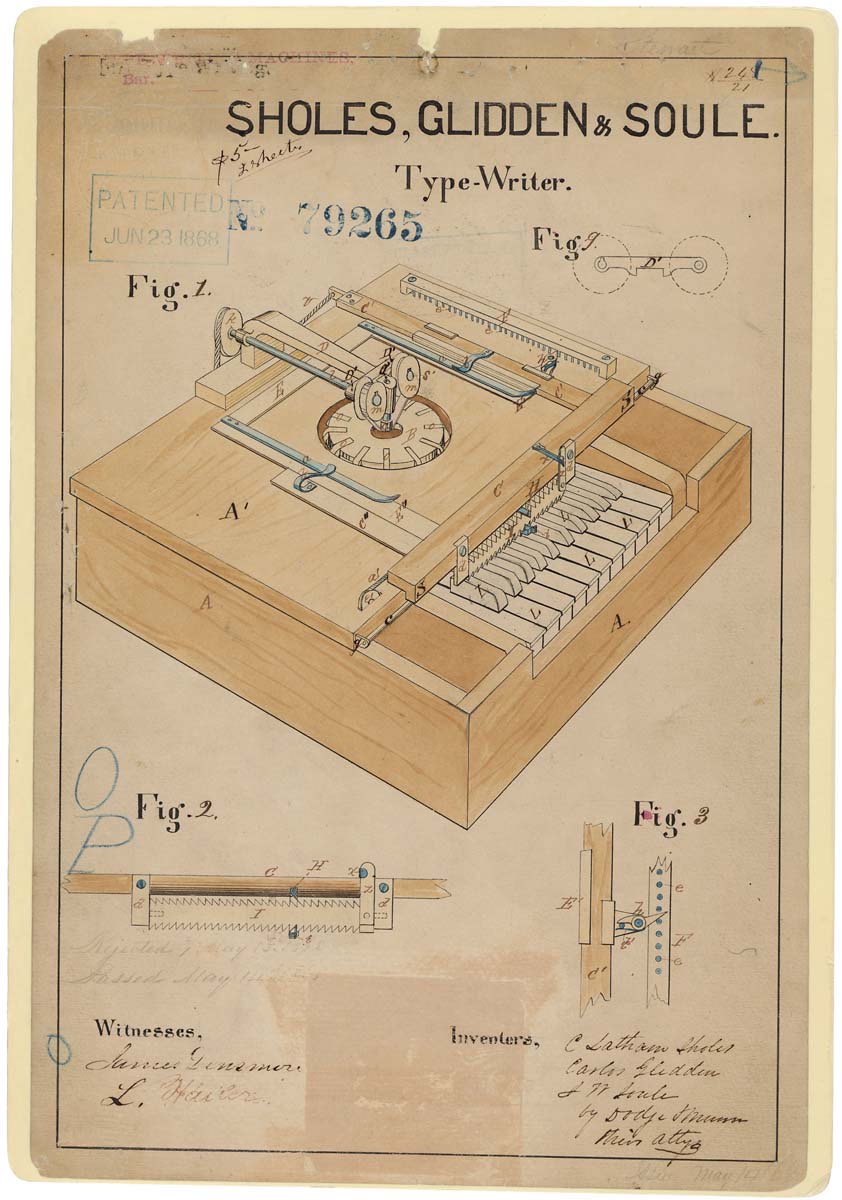
1868: The Sholes, Glidden and Soule patent drawing

A printed patent drawing of a typewriter mechanism dated 23 June 1868
The printed patent drawing for the typewriter of Christopher Latham Sholes, Carlos Glidden and Samuel W. Soule, dated 23 June 1868. Credit: United States Patent Office, via Wikimedia Commons, Public domain.

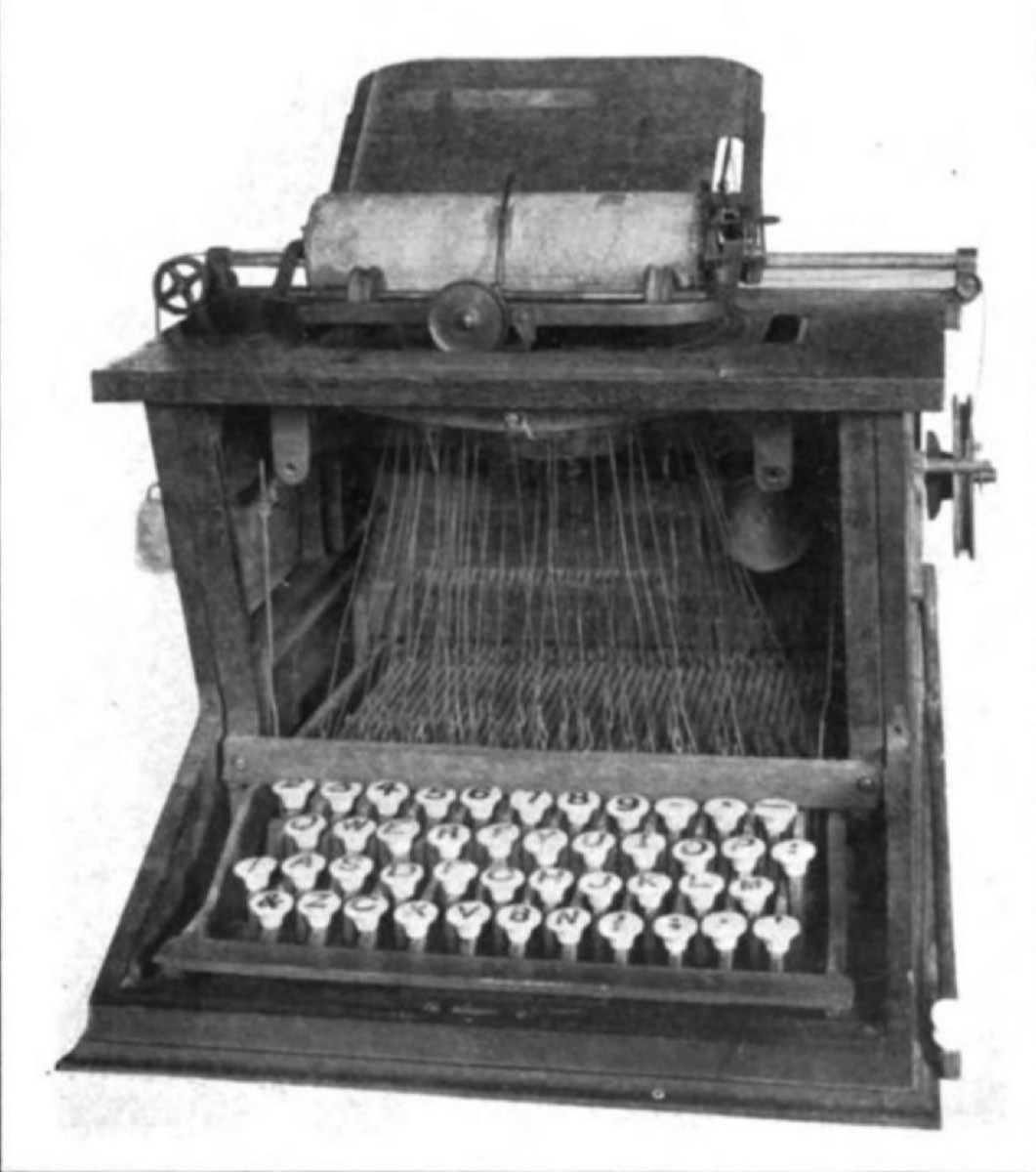
about 1870: A Sholes prototype

A photograph of an early prototype typewriter with a wooden frame and rows of keys
A prototype of the machine Sholes and his partners developed between 1868 and 1873, from a photograph published in 1912. Credit: George Iles, via Wikimedia Commons, Public domain.

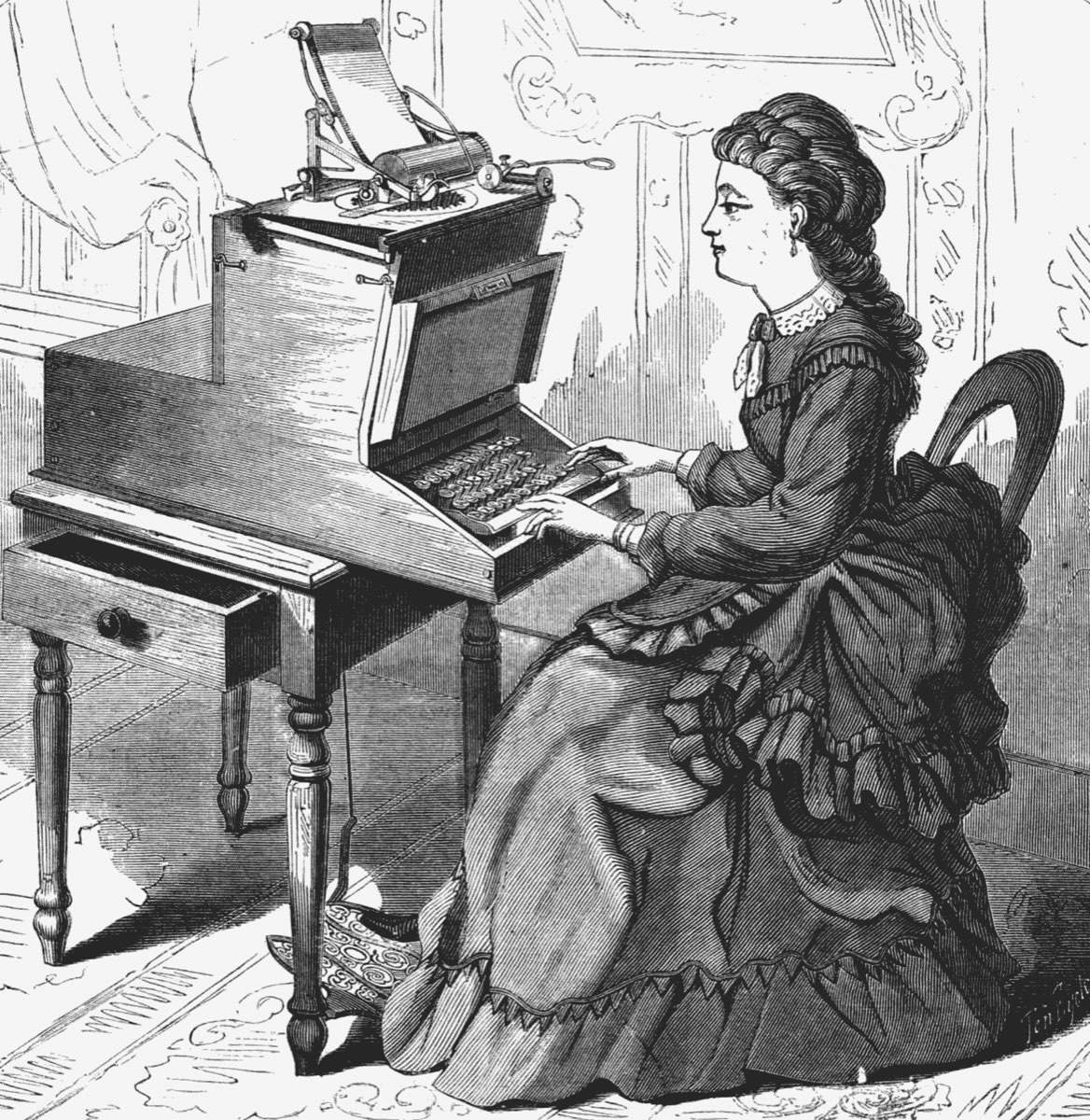
1872: The machine in use

An engraving of a young woman seated at an early typewriter
An 1872 engraving of a young woman operating the Sholes and Glidden machine. Credit: Ten Eyck N.Y., via Wikimedia Commons, Public domain.

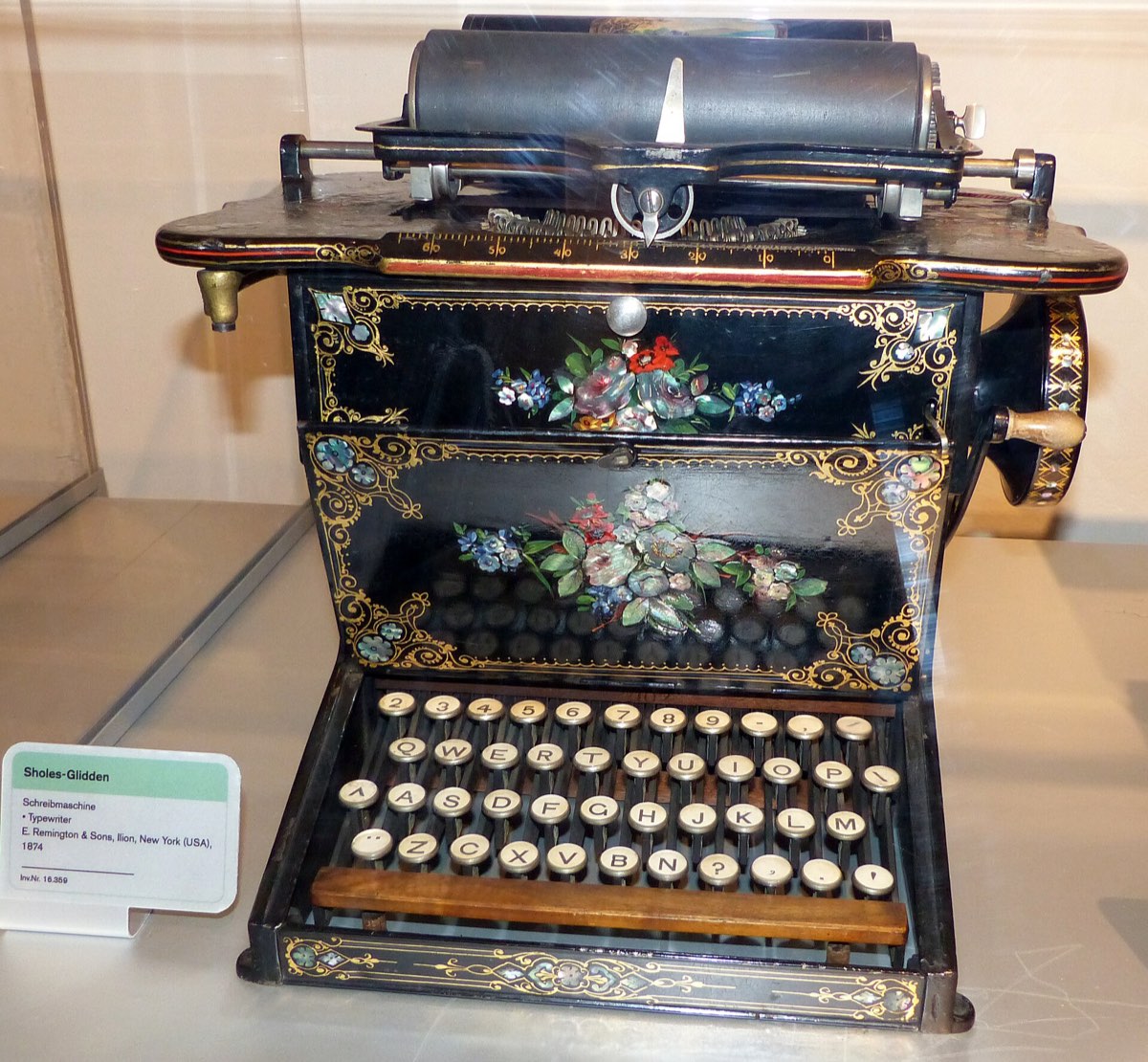
1874: The Sholes and Glidden

An ornate black typewriter decorated with painted flowers, in a museum display
A Sholes and Glidden typewriter of 1874, the first to be sold in numbers, at the Technisches Museum in Vienna. Credit: Dr. Bernd Gross, via Wikimedia Commons, CC BY-SA 4.0.

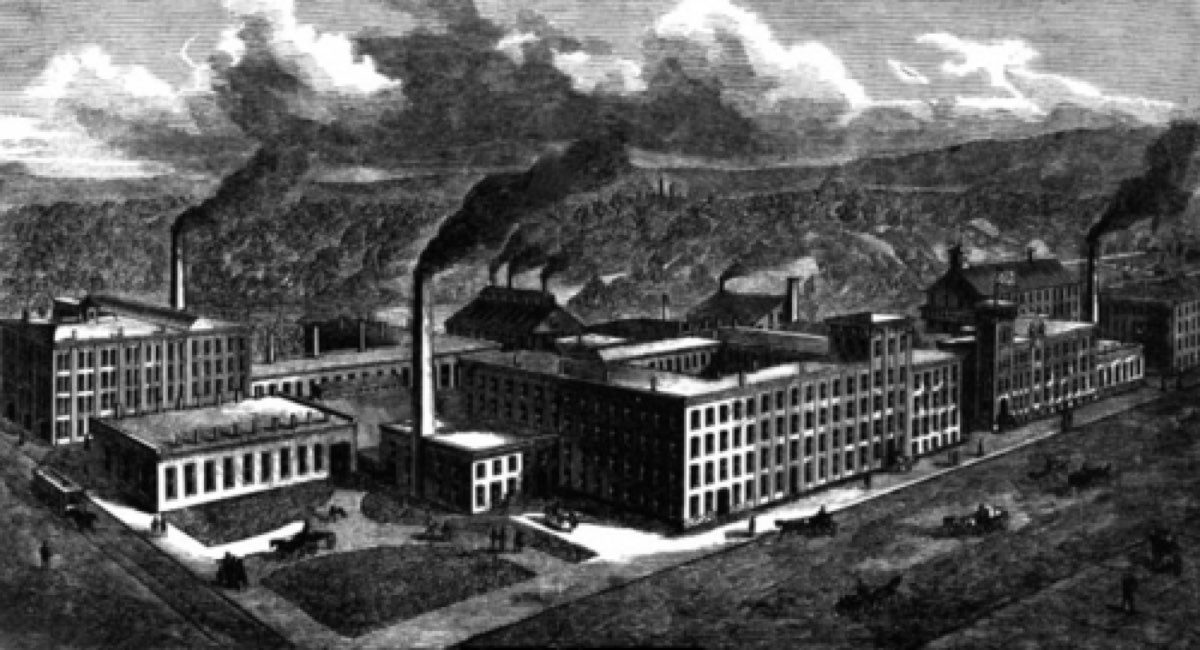
1874: Where it was made

An engraving of a large factory complex beside a river
The E. Remington and Sons works at Ilion, New York, about 1874, where the Sholes and Glidden was manufactured. Credit: Unknown author, via Wikimedia Commons, Public domain.

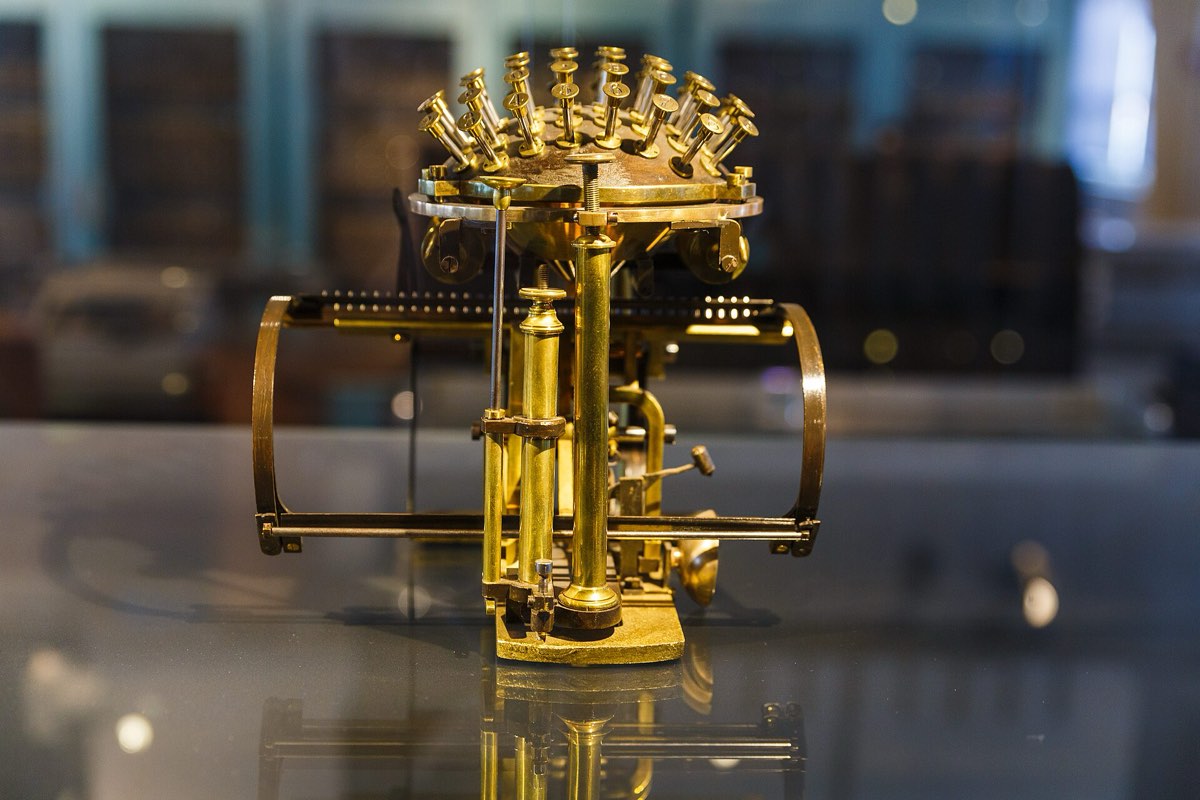
1878: The writing ball

A brass hemisphere studded with keys above a curved paper carrier
A writing ball by the Danish inventor Rasmus Malling-Hansen, 1878. The keys sit on a dome and all strike one central point. Credit: Eremeev, via Wikimedia Commons, CC BY-SA 4.0.

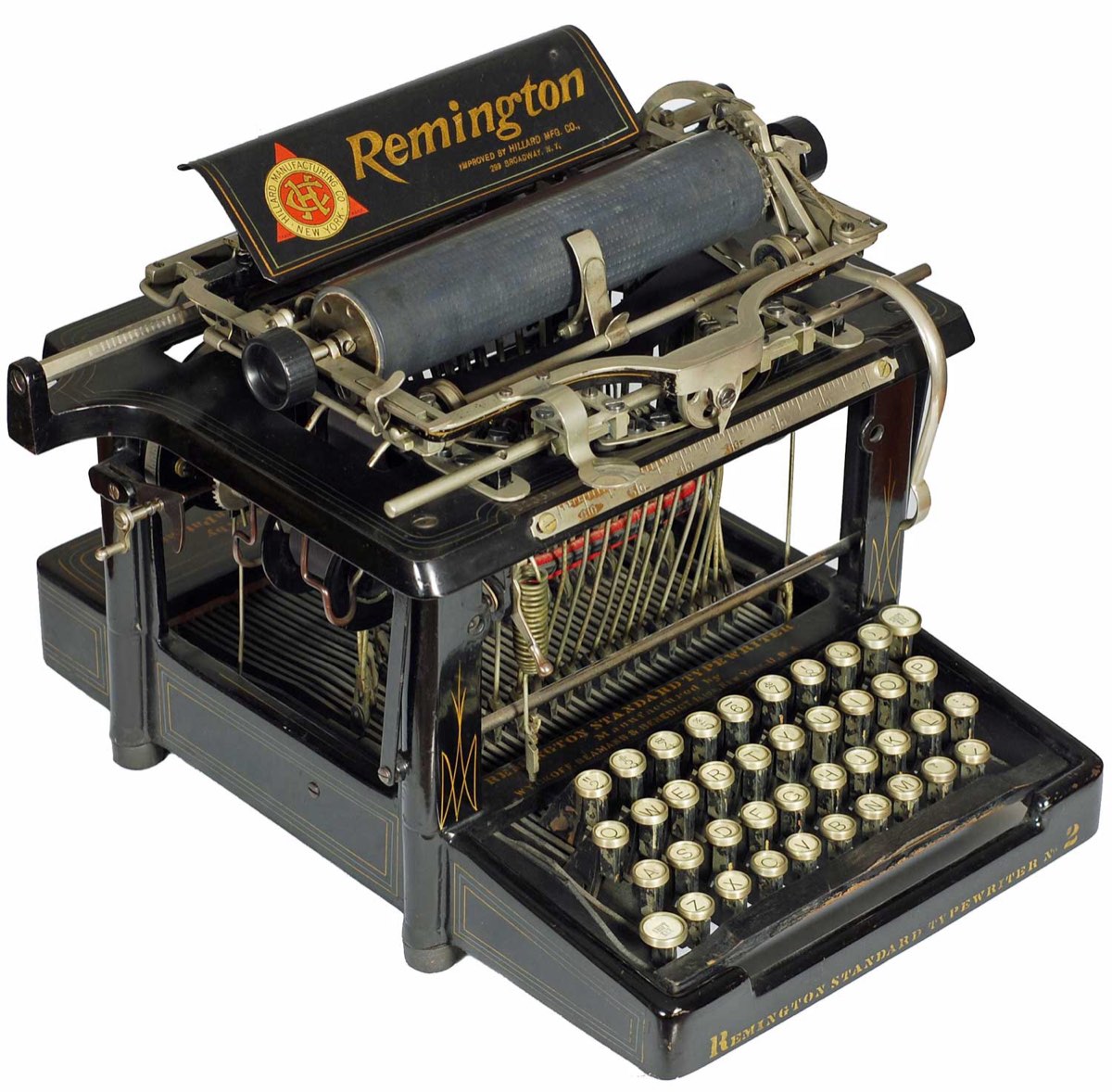
1878: The Remington 2

A black upright typewriter with a four row keyboard
The Remington 2 of 1878, the machine that added a shift key so that one typebar could print a capital and a small letter. Credit: Martin Howard, via Wikimedia Commons, CC BY-SA 4.0.

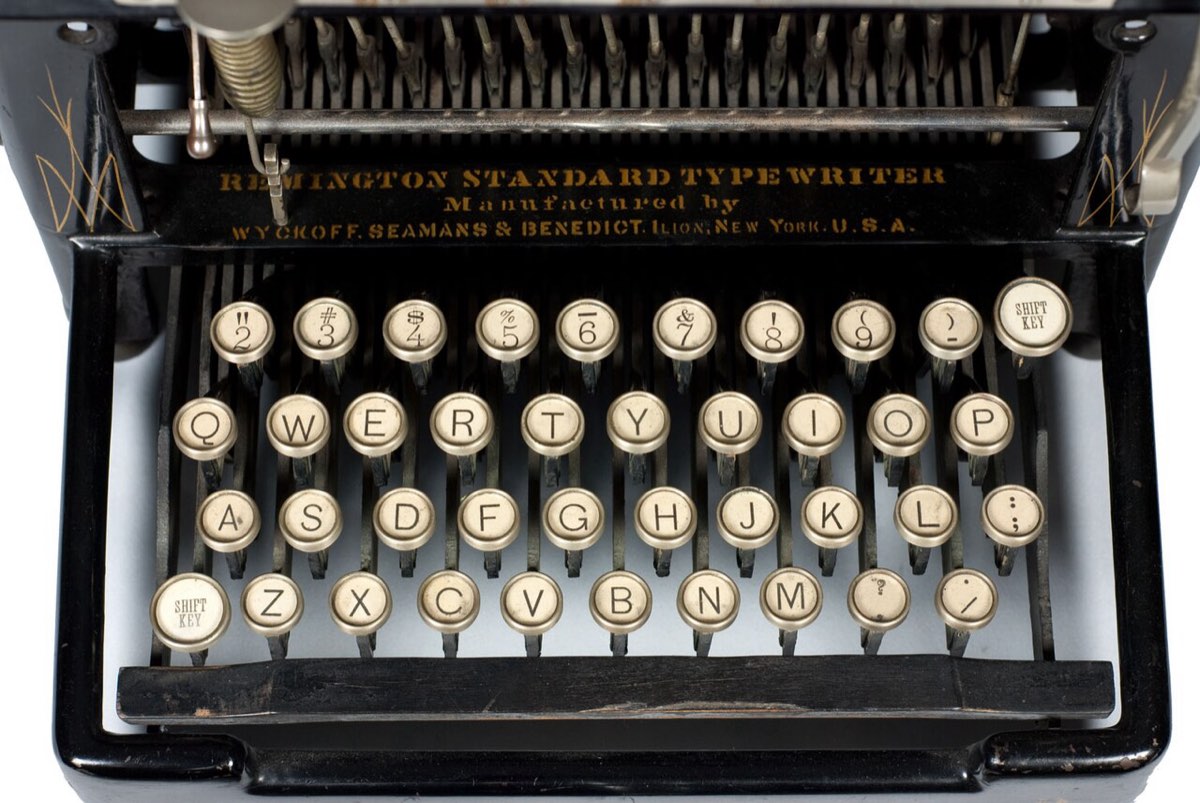
1878: Its keyboard

A close view of round typewriter keys in four rows
The keyboard of the Remington 2. The letter arrangement is the one still in use. Credit: Martin Howard, via Wikimedia Commons, CC BY-SA 4.0.

The experimental years: 1880s and 1890s

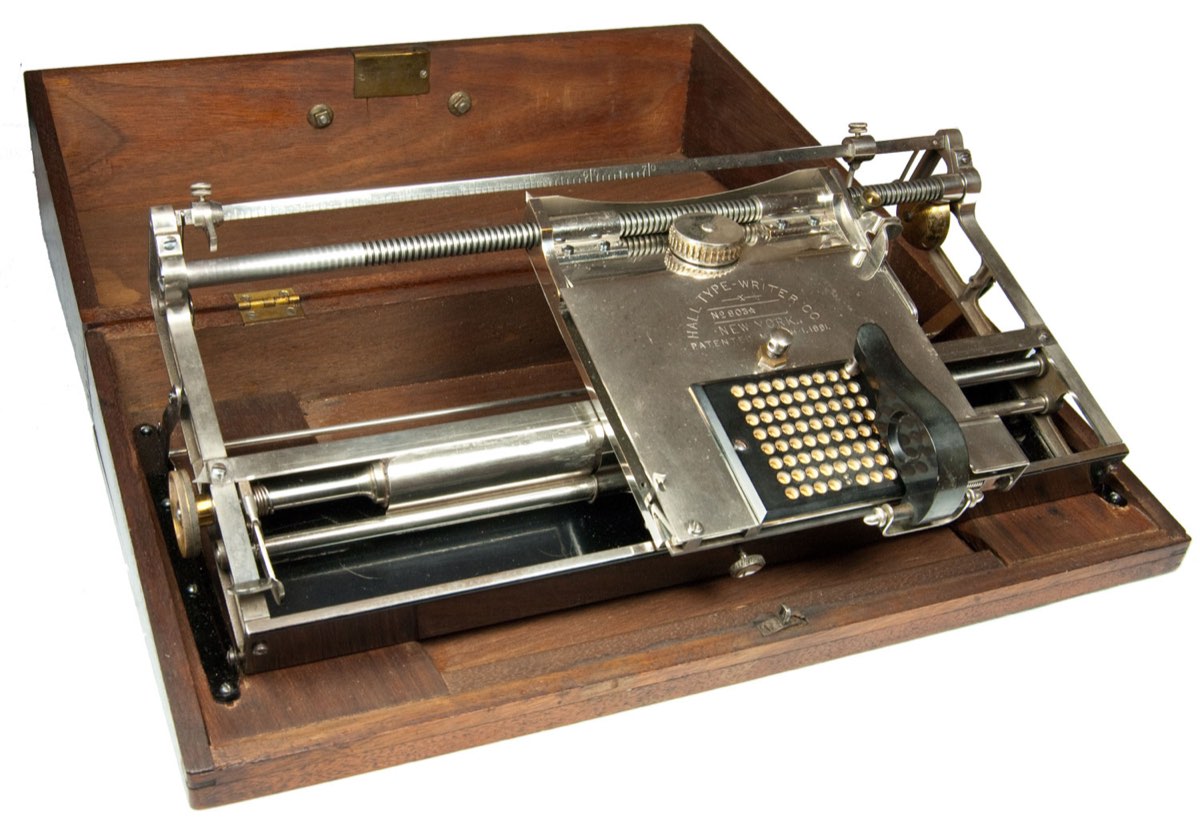
1881: The Hall index typewriter

A small box-shaped typewriter with a grid of characters and a pointer
The Hall 1 of 1881, described by the Martin Howard Collection as the first index typewriter: the typist points at a letter instead of pressing a key. Credit: Martin Howard, via Wikimedia Commons, CC BY-SA 4.0.

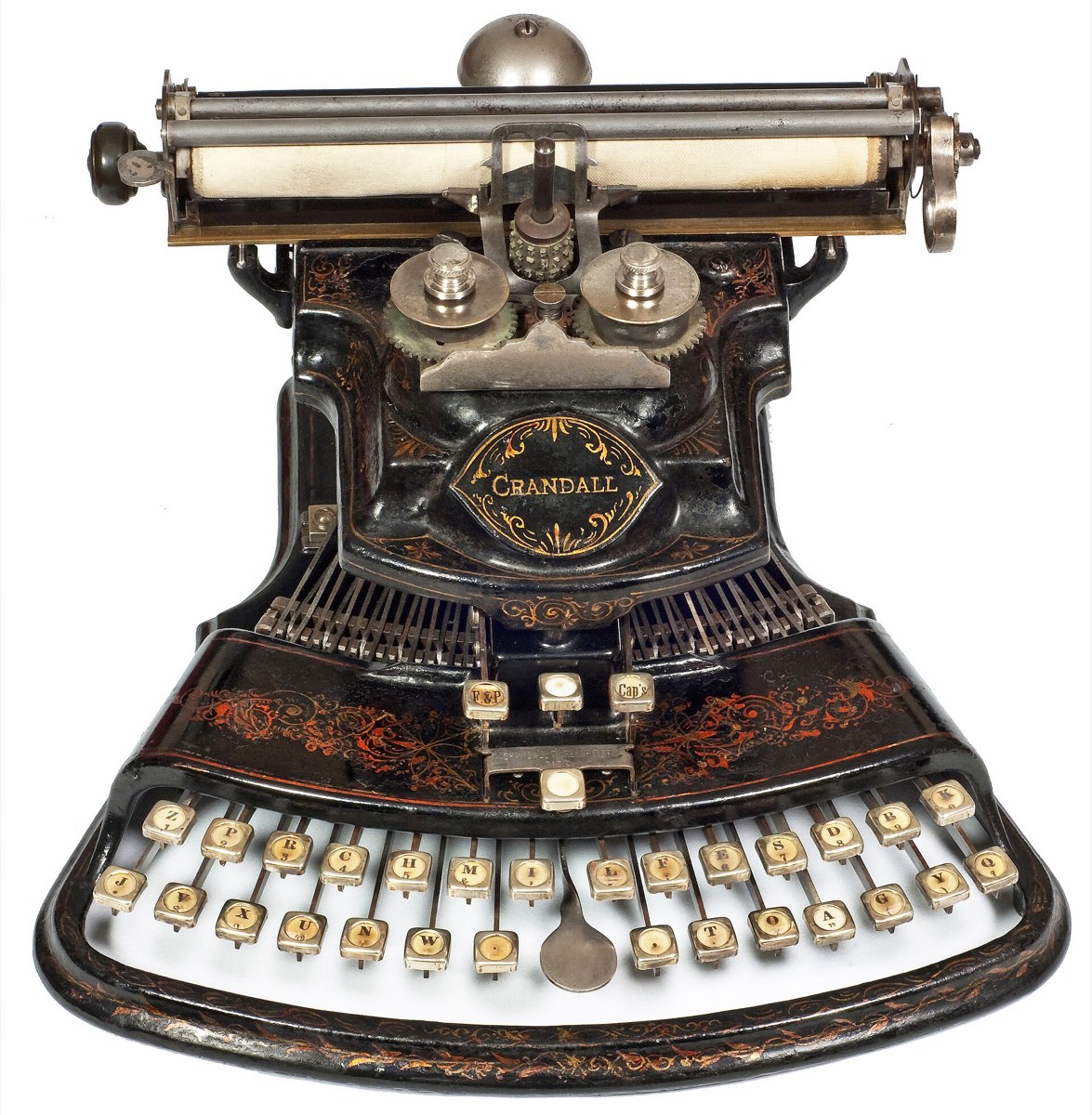
1883: The Crandall 1

A typewriter with a curved keyboard, glass keys and hand-painted decoration
A Crandall 1 of 1883 with hand-painted decoration and nickel-rimmed glass keys. Credit: Martin Howard, via Wikimedia Commons, CC BY-SA 4.0.

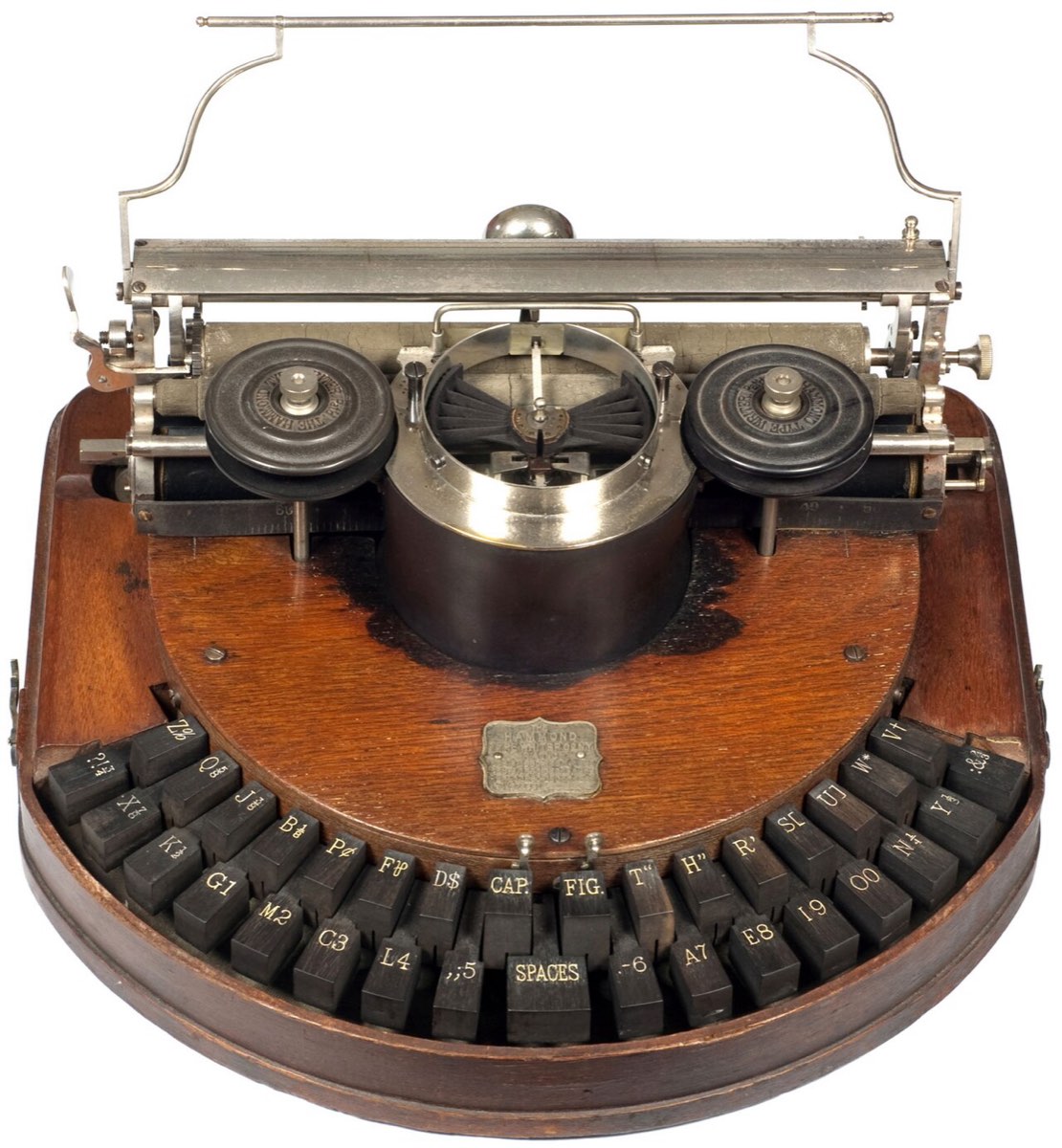
1885: The Hammond 1

A typewriter with a curved two row keyboard in a wooden case
The Hammond 1 of 1885, with its curved keyboard. Credit: Martin Howard, via Wikimedia Commons, CC BY-SA 4.0.

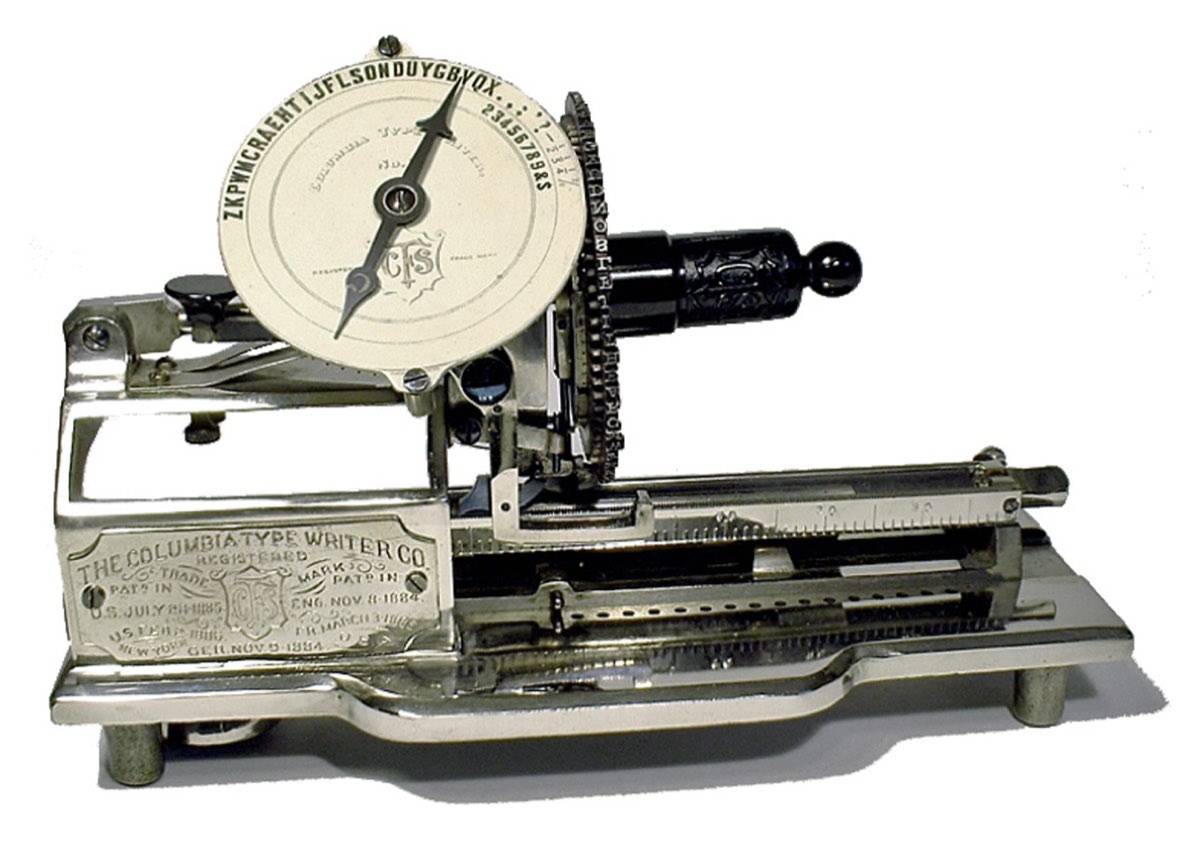
1886: The Columbia 2

A small index typewriter with a large dial
The Columbia 2 of 1886, a compact index machine. Credit: Martin Howard, via Wikimedia Commons, CC BY-SA 4.0.

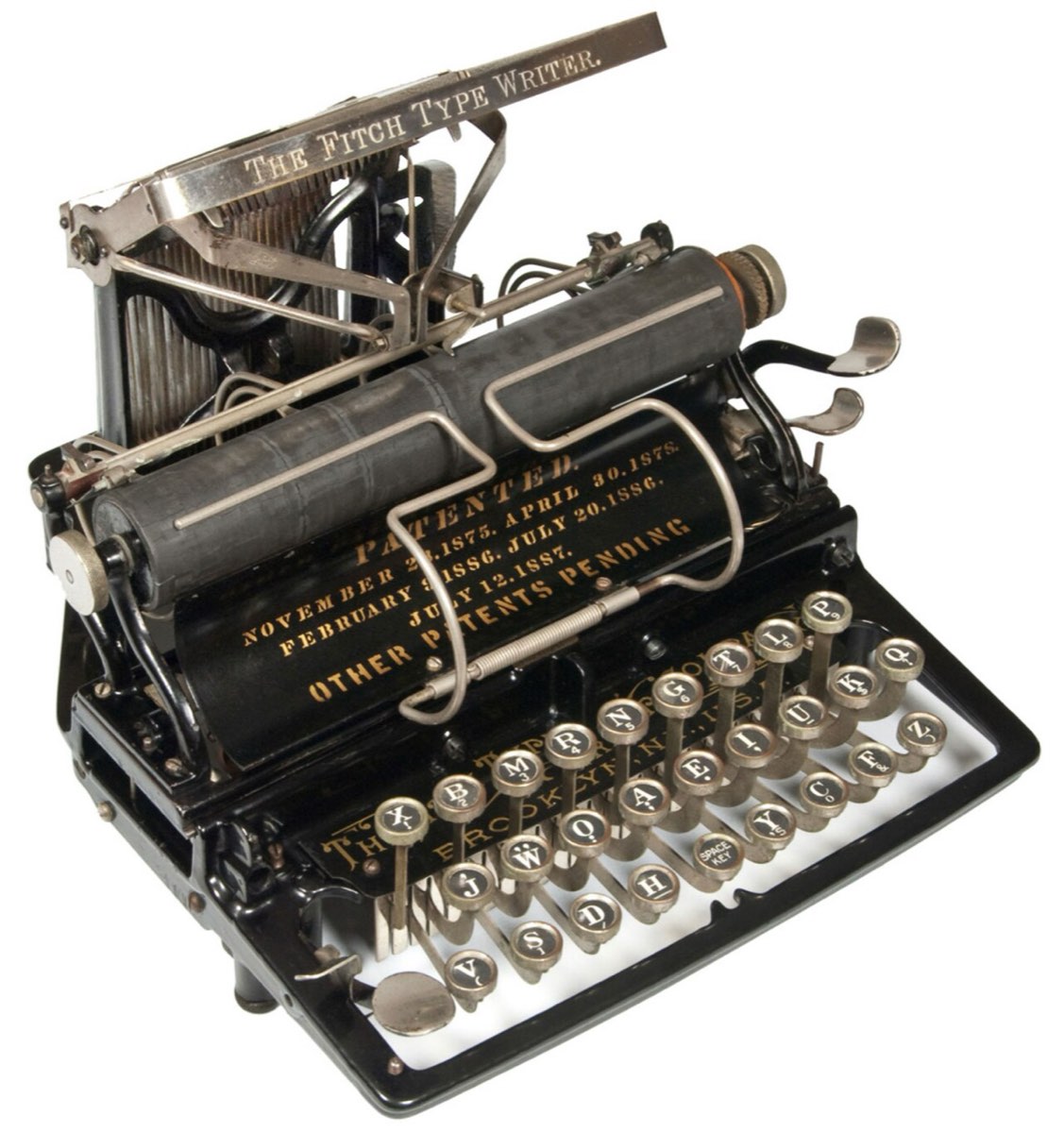
1888: The Fitch 1

A compact typewriter with typebars standing behind the paper
The Fitch 1 of 1888. Credit: Martin Howard, via Wikimedia Commons, CC BY-SA 4.0.

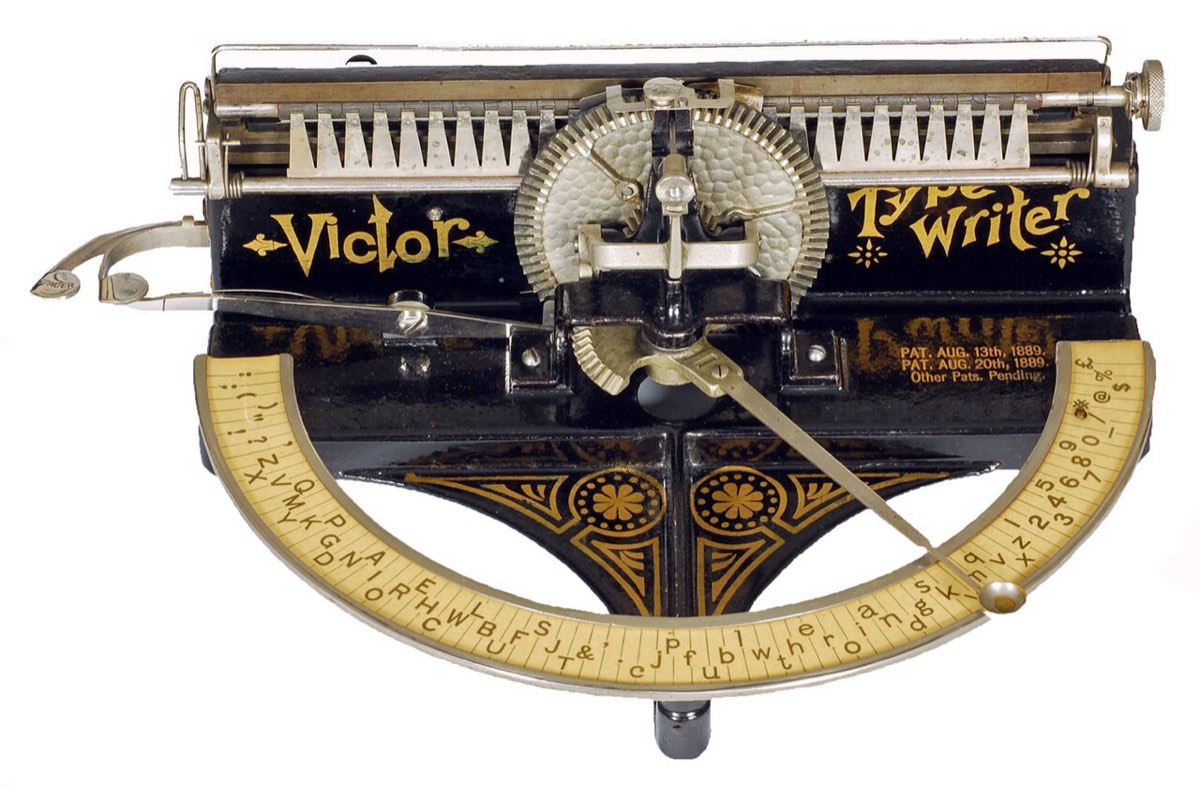
1889: The Victor

An index typewriter with a semicircular letter plate
The Victor of 1889, which the Martin Howard Collection describes as the first successful typewriter to use a daisy wheel. Credit: Martin Howard, via Wikimedia Commons, CC BY-SA 4.0.

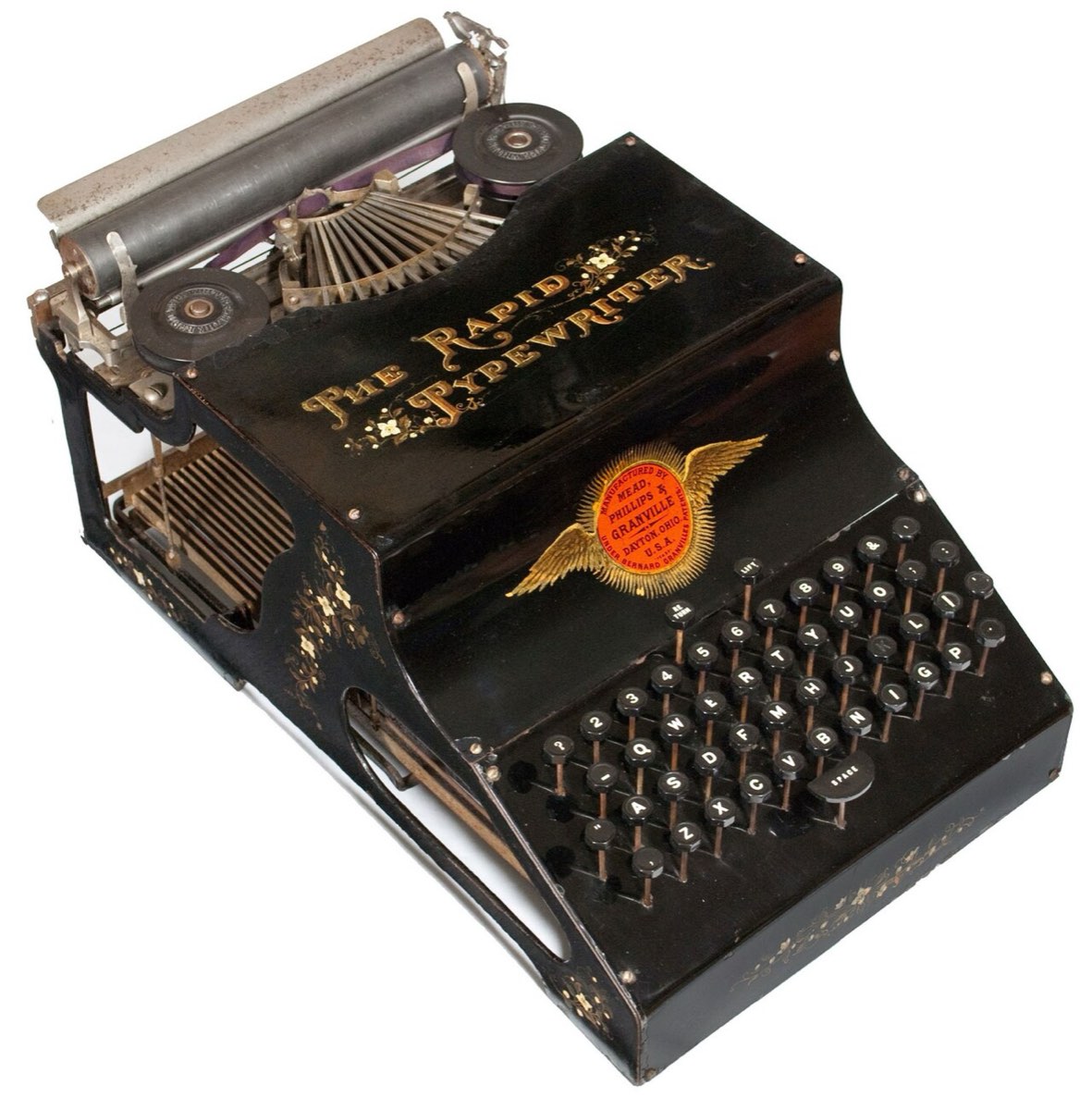
1890: The Rapid

An upright typewriter with a tall frame and round keys
The Rapid typewriter of 1890. Credit: Martin Howard, via Wikimedia Commons, CC BY-SA 4.0.

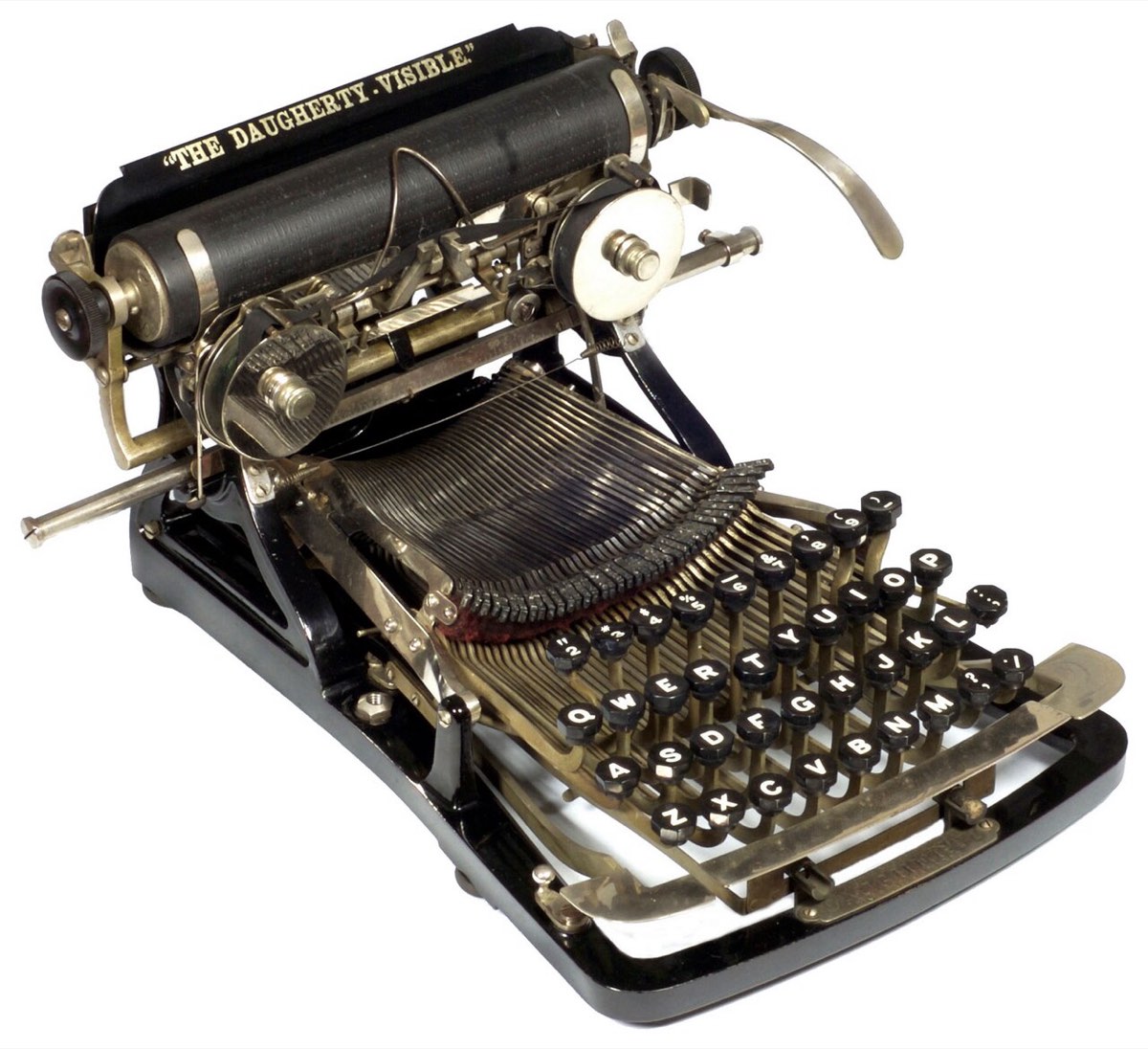
1893: The Daugherty

A typewriter with its typebars in front of the paper, so the typed line can be seen
The Daugherty of 1893. Credit: Martin Howard, via Wikimedia Commons, CC BY-SA 4.0.

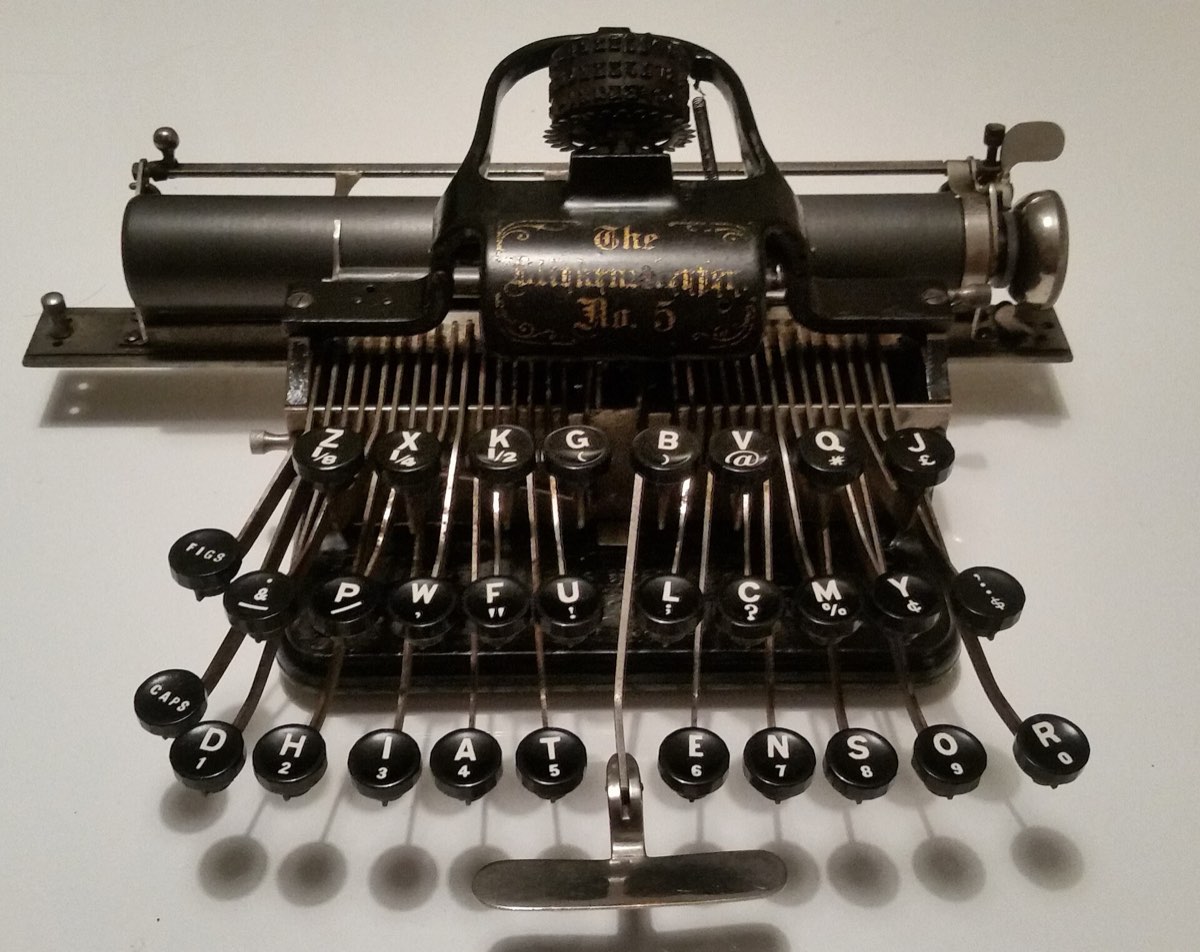
1894: The Blickensderfer 5

A small portable typewriter with a three row keyboard
An early Blickensderfer No. 5, dated 1894, a light machine that printed from a rotating typewheel. Credit: Bwilson888, via Wikimedia Commons, CC BY-SA 4.0.

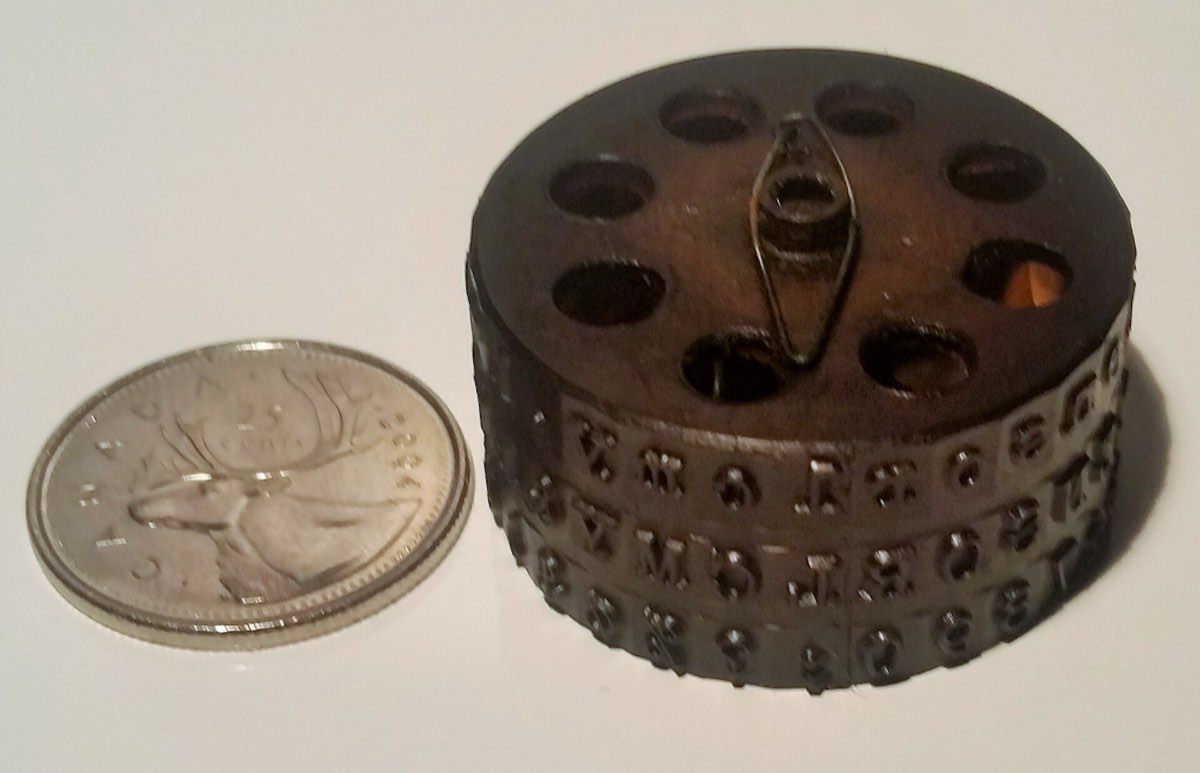
about 1900: A typewheel

A small cylinder with rows of raised letters around it
A Blickensderfer typewheel. Changing the wheel changed the typeface. Credit: Bwilson888, via Wikimedia Commons, CC BY-SA 4.0.

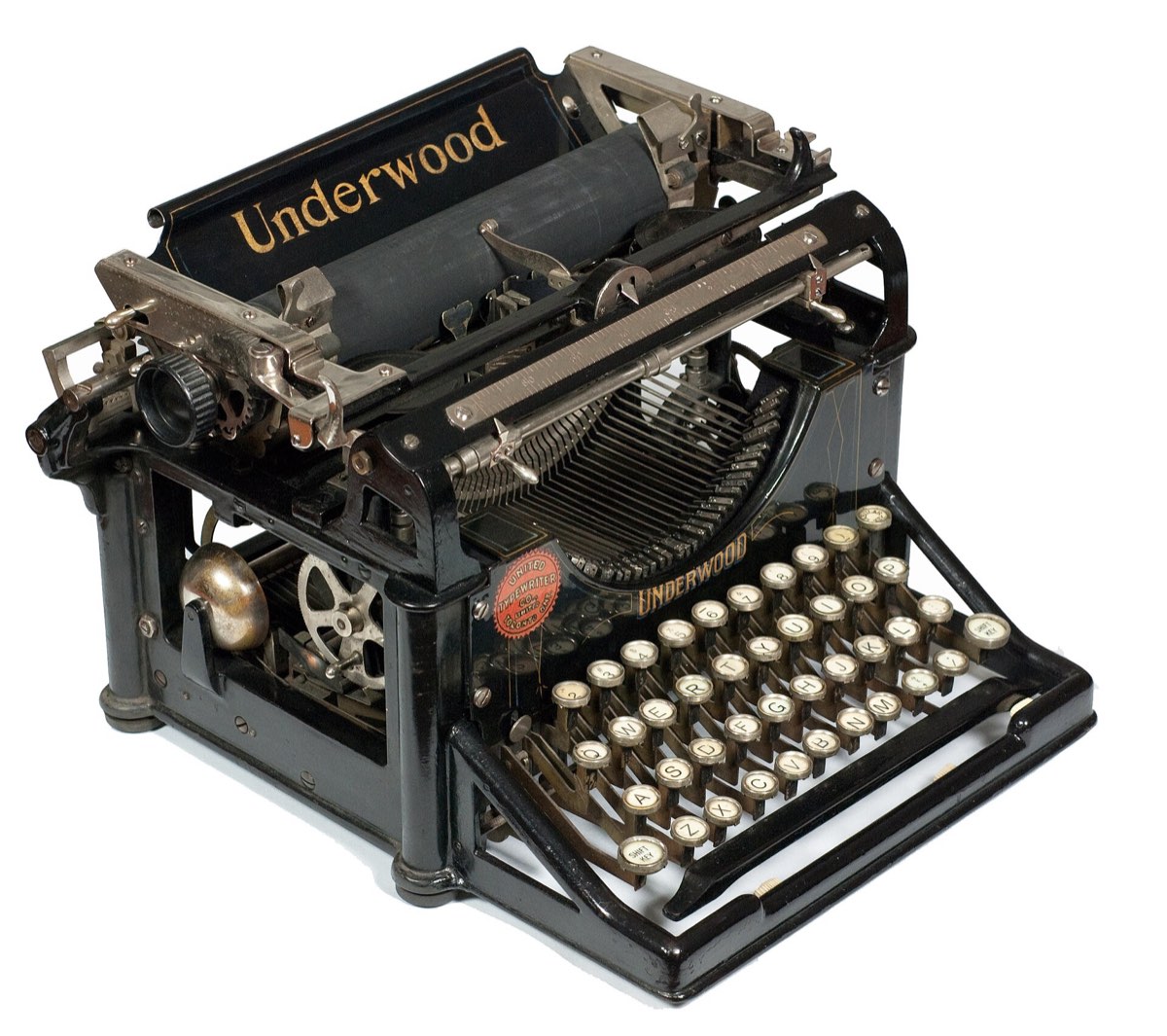
1896: The Underwood 1

A black typewriter with an open front showing the typebars and the paper
The Underwood 1 of 1896. Its front-strike layout, with the typed line in view, became the standard design for the next century. Credit: Martin Howard, via Wikimedia Commons, CC BY-SA 4.0.

The office machine: 1900 to 1940

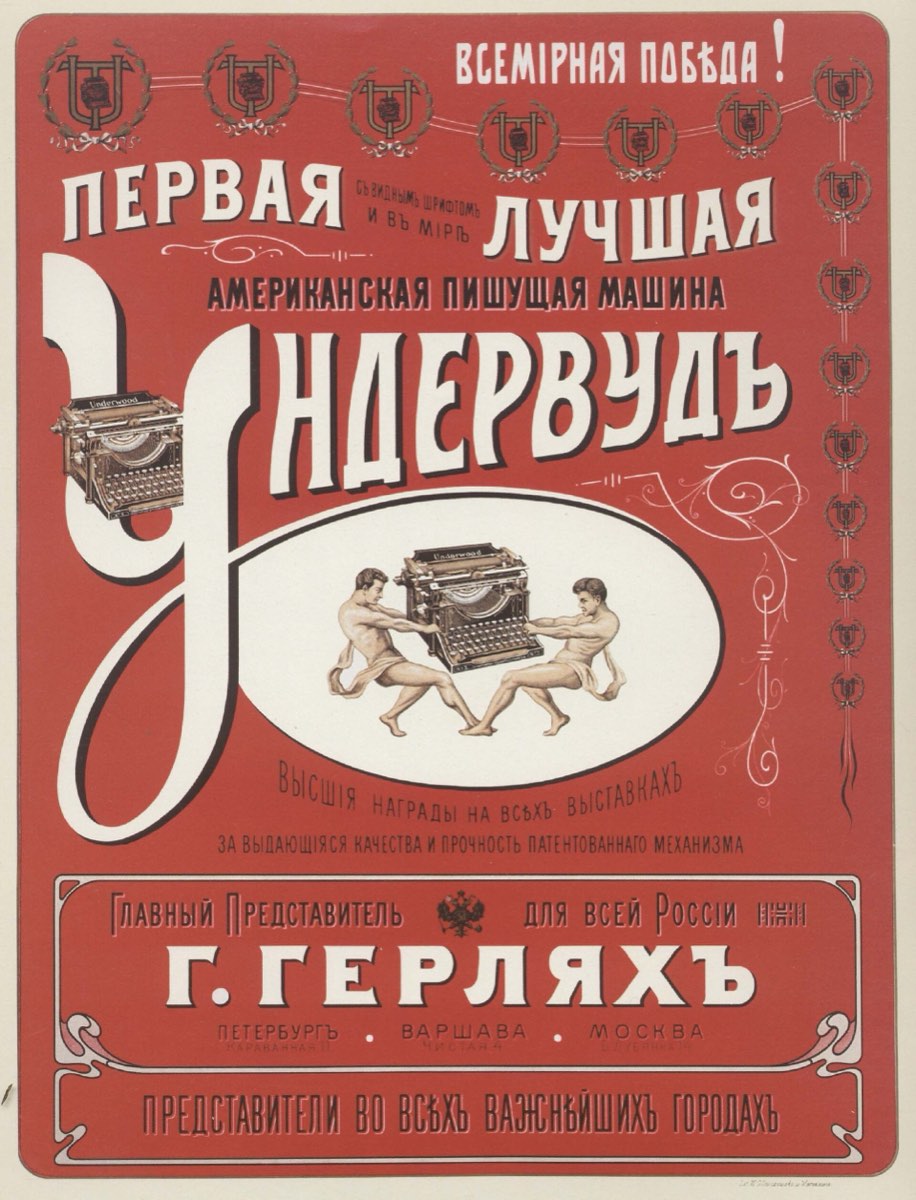
1900: An advertisement from Russia

A printed advertisement showing a typewriter with Russian text
An advertisement for Underwood typewriters printed in Russia in 1900. Credit: Unknown author, via Wikimedia Commons, Public domain.

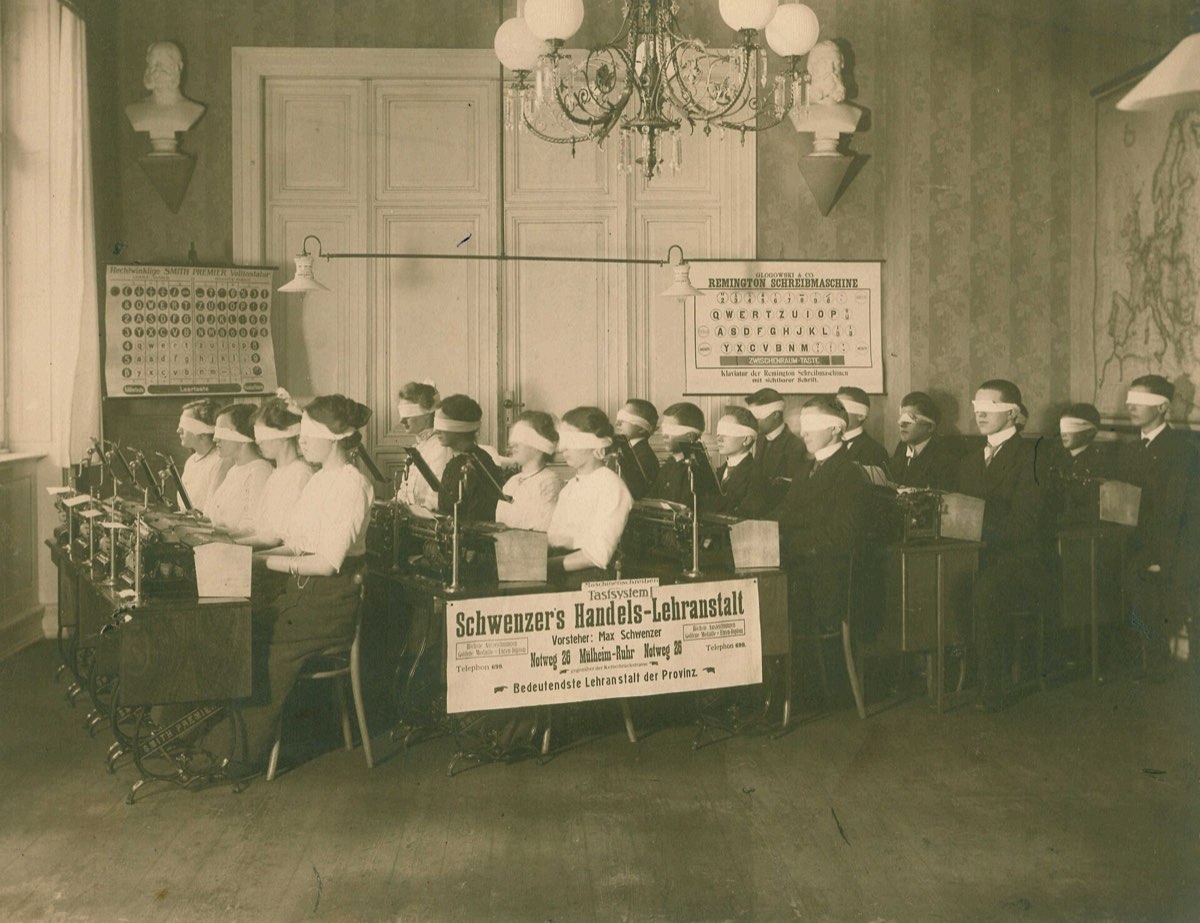
1910: A touch typing class

A large group of students and teachers posed in a hall behind a row of typewriters
A staged promotional photograph of touch typing instruction at a typing school in Mülheim, Germany, 1910. Credit: Unknown author, via Wikimedia Commons, Public domain.

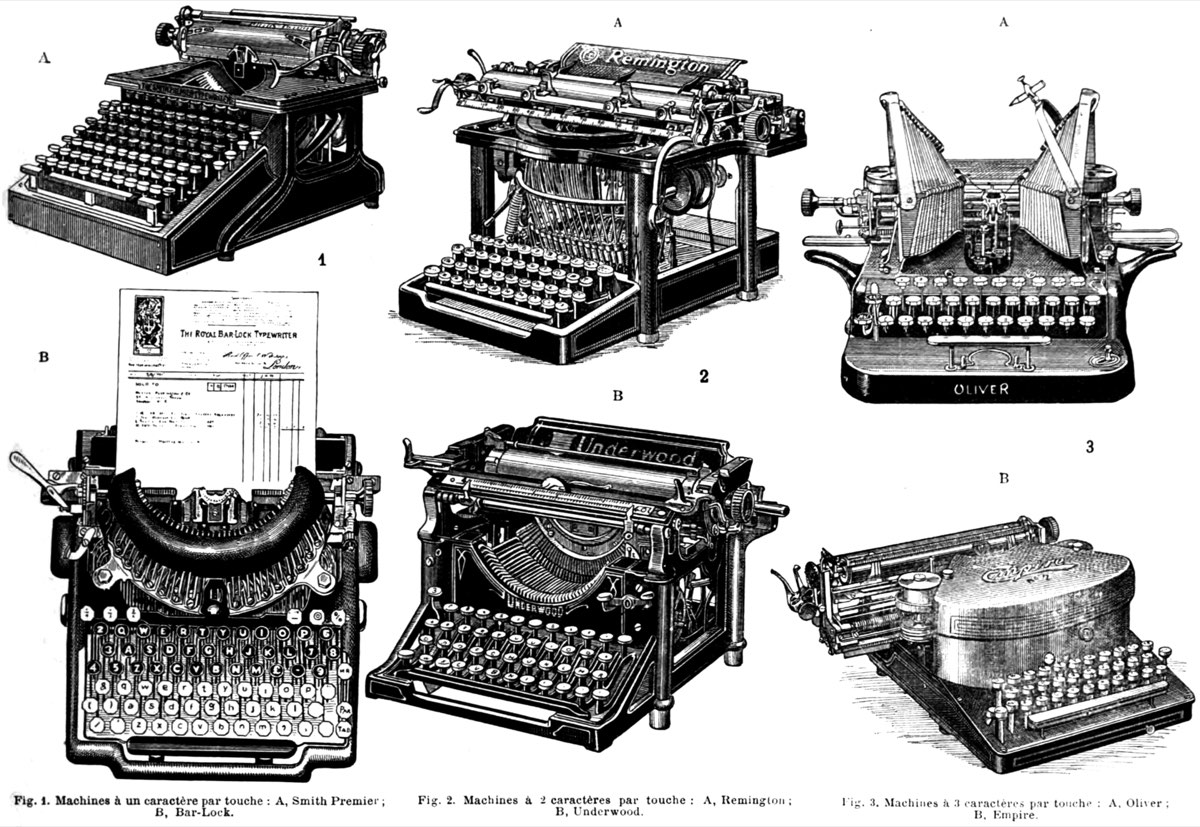
1911: Three kinds of keyboard

Engravings comparing typewriters with full keyboards, single shift and double shift
Engravings from 1911 comparing full-keyboard, single-shift and double-shift typewriters. Credit: Anonymous engraver, via Wikimedia Commons, Public domain.

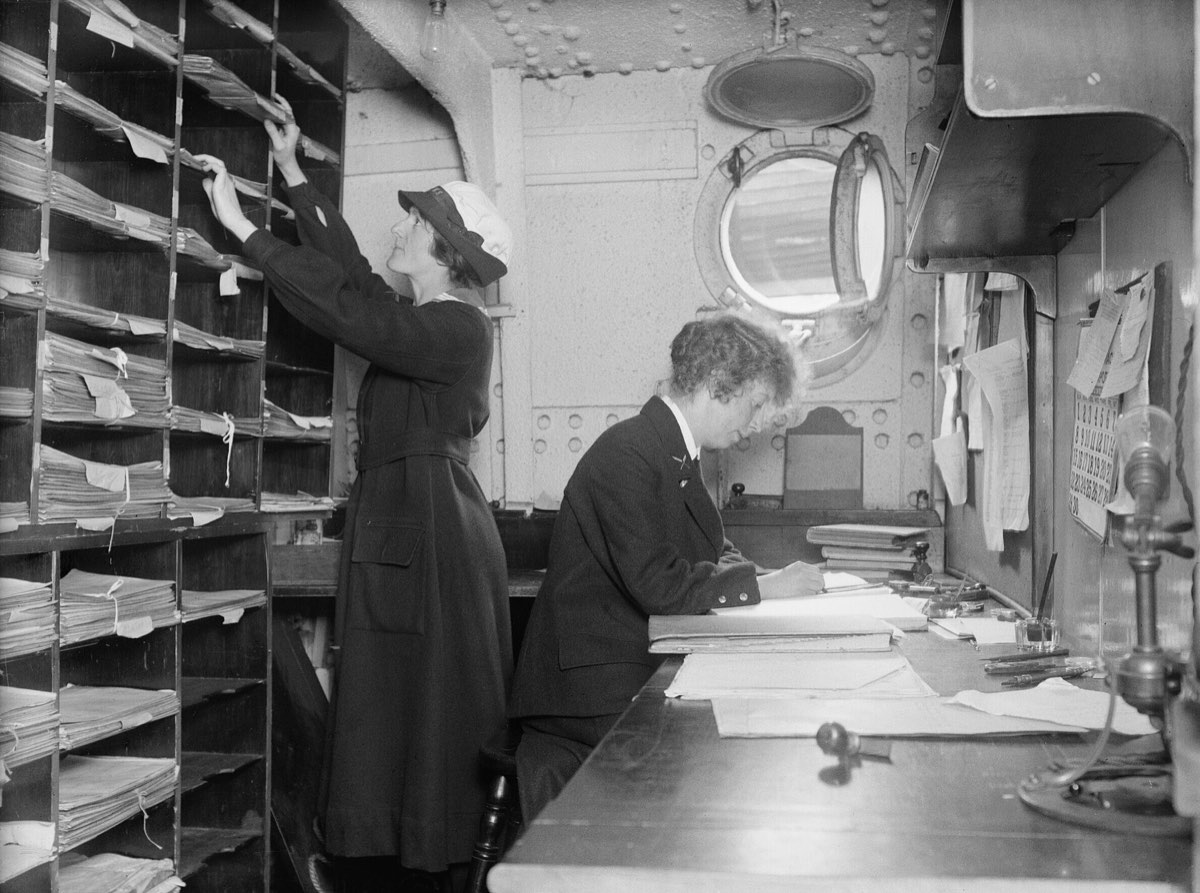
1917: Naval clerks at work

Women clerks at work in a ship's office lined with pigeonholes
Clerks of the Women's Royal Naval Service at work on board HMS Essex at Devonport during the First World War. Credit: George P. Lewis, via Wikimedia Commons, Public domain.

1919: An army repair shop

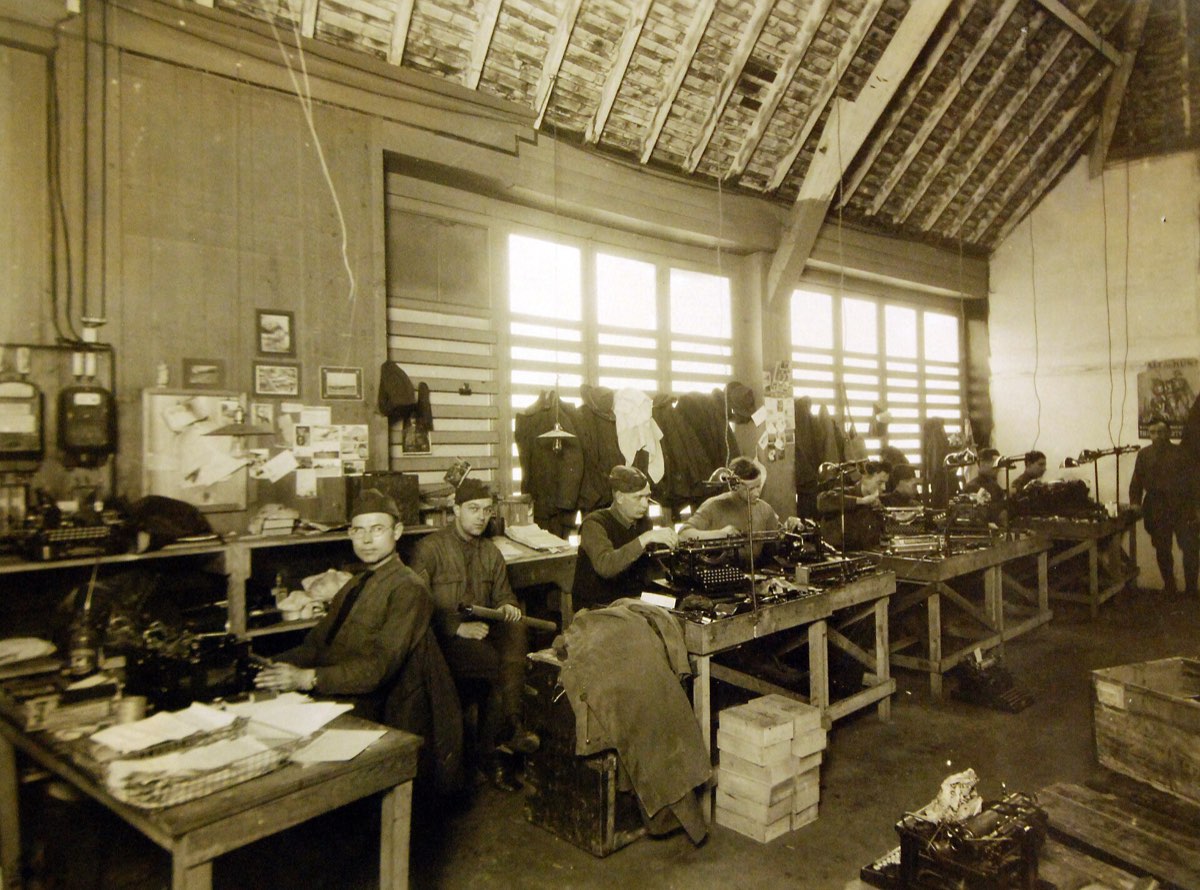
Soldiers at benches repairing typewriters
Soldiers of the United States Quartermaster Corps repairing typewriters at Tours, France, in 1919. Credit: National Museum of the U.S. Navy, via Wikimedia Commons, Public domain.

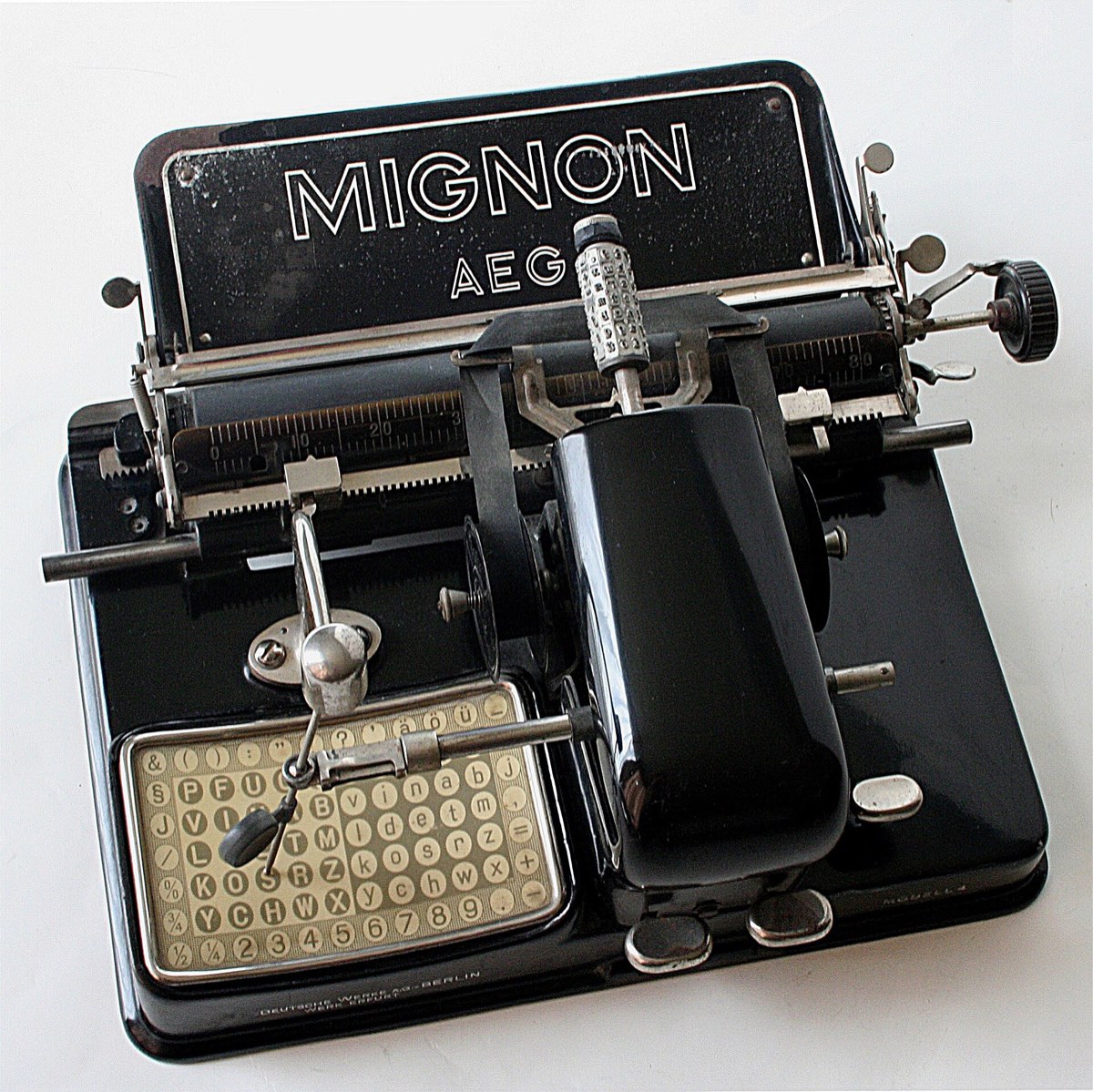
1924: The Mignon 4

A typewriter with a letter chart on the left and a pointer
A Mignon Model 4 of 1924, a German index typewriter operated with a pointer. Credit: Lothar Spurzem, via Wikimedia Commons, CC BY-SA 2.0 de.

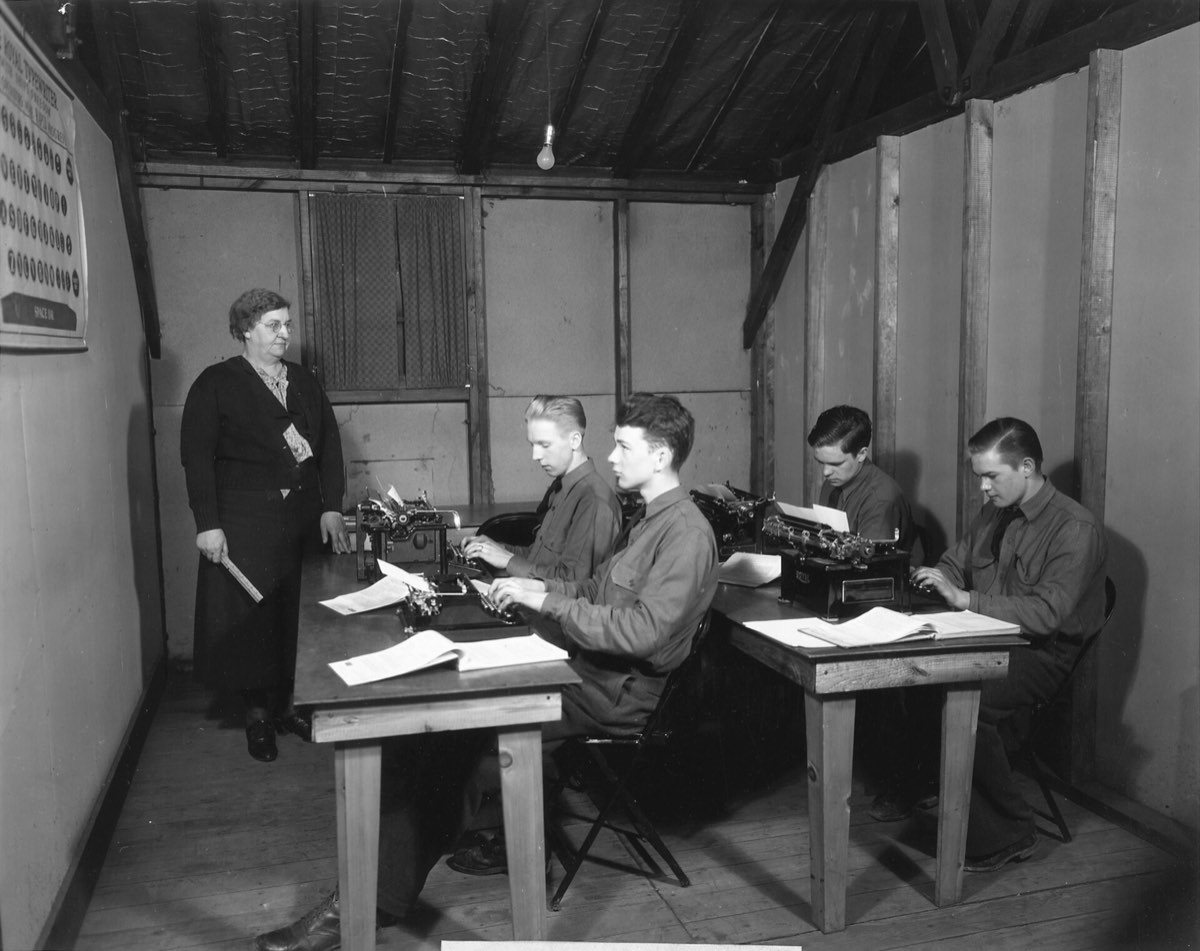
about 1933: A typing class

Young men seated at typewriters in a classroom
A Civilian Conservation Corps typing class in the United States, about 1933. Credit: Unknown author, via Wikimedia Commons, Public domain.

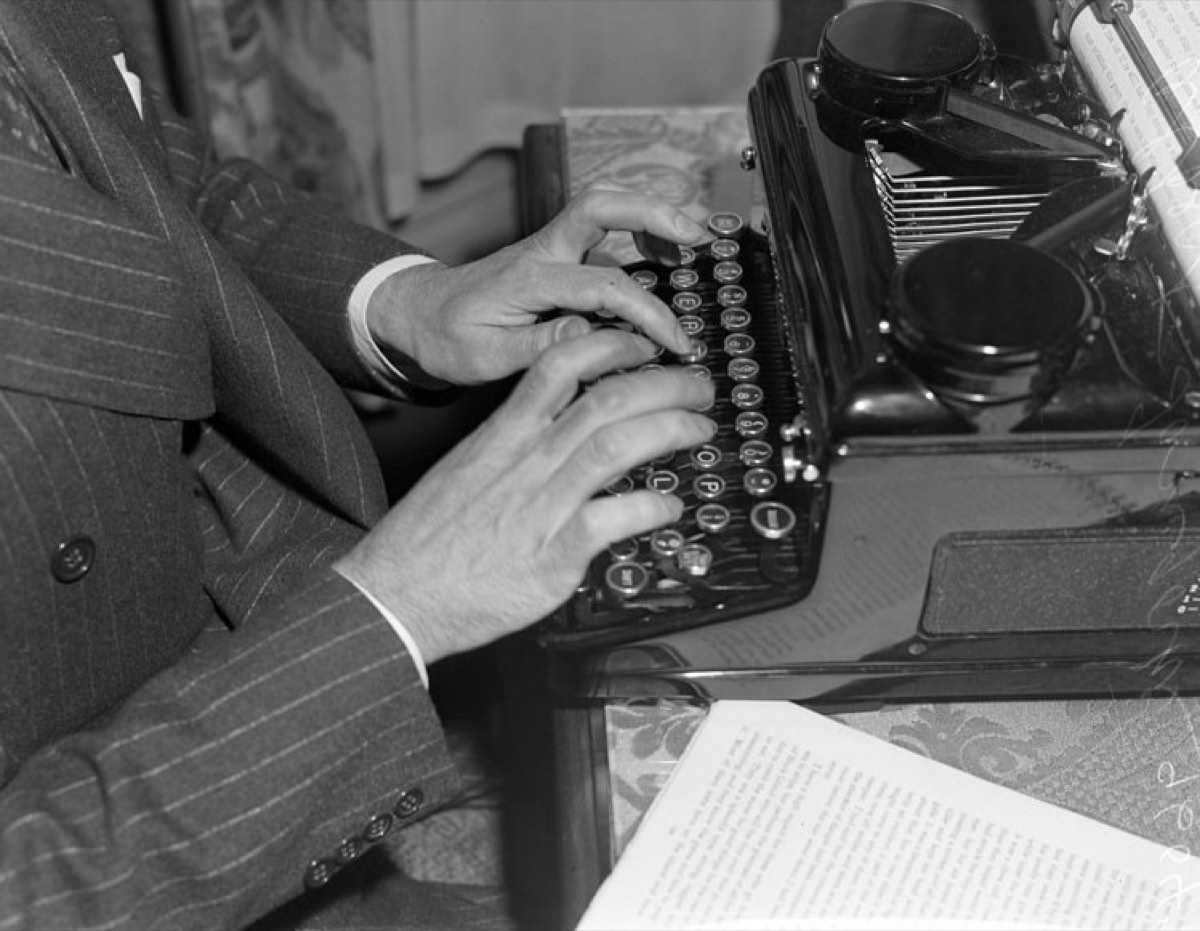
1938: A champion's hands

Hands on a typewriter keyboard, photographed from close by
The speed typist Albert Tangora at the keyboard, 1938. Credit: Joe De Narie, via Wikimedia Commons, CC BY 4.0.

War, competition and the last mechanical generation

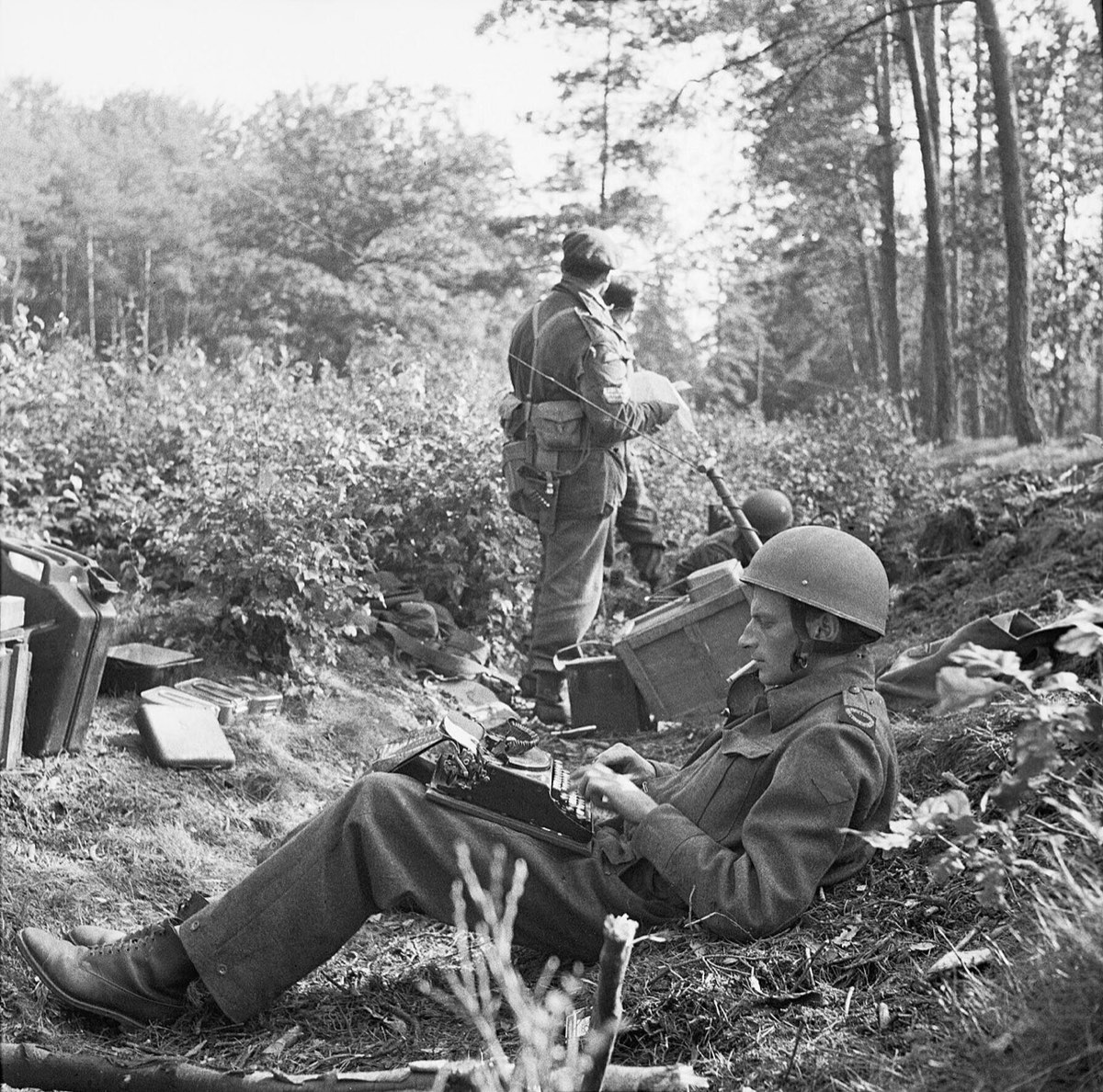
1944: A dispatch from Arnhem

A man typing on a portable typewriter on the ground in a wood, with soldiers beside him
The war correspondent Alan Wood typing his dispatch in a wood outside Arnhem, 18 September 1944. Credit: Imperial War Museums, via Wikimedia Commons, Public domain.

1954: A national championship

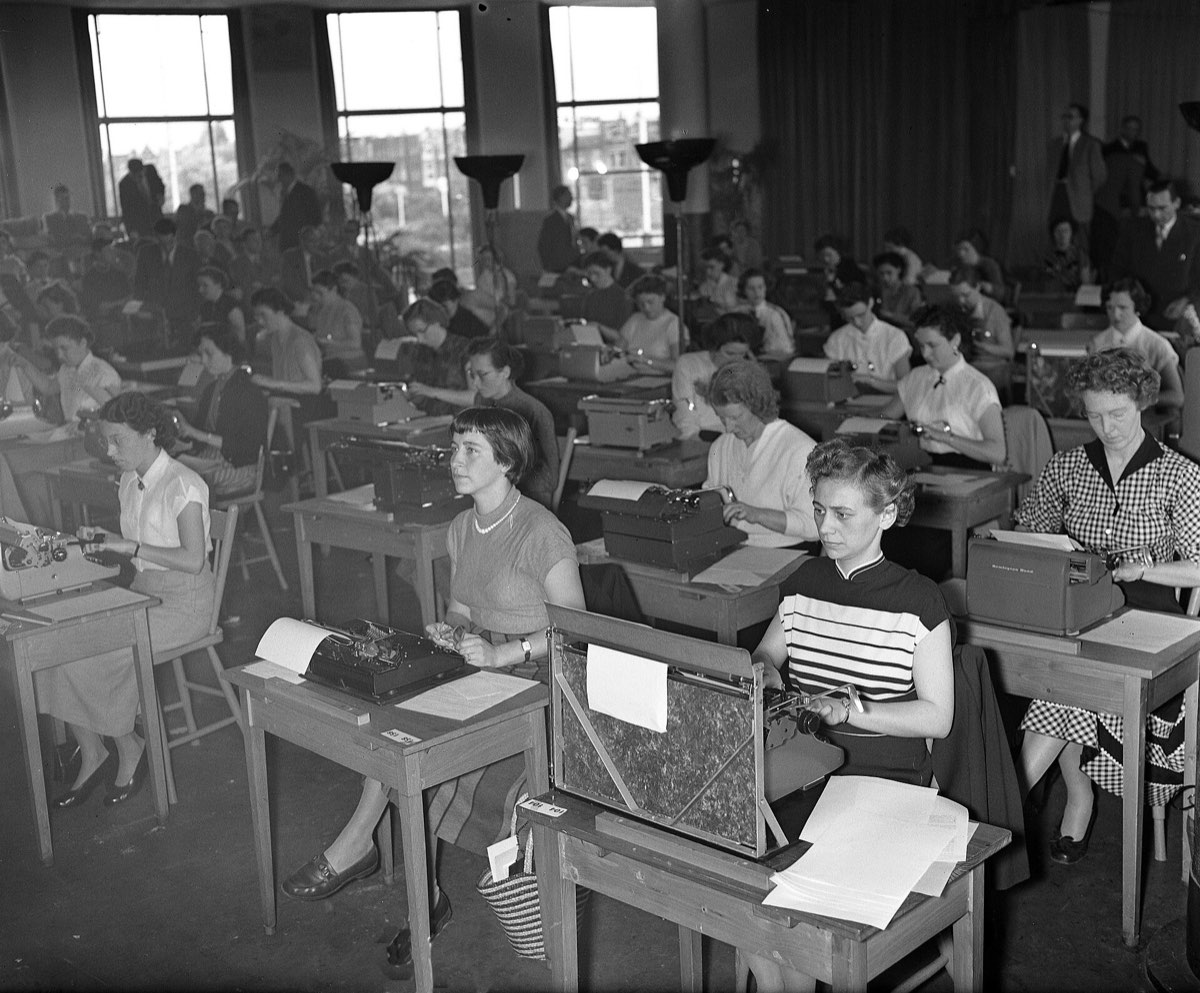
A hall full of typists competing at rows of desks
The Dutch national typing championship in The Hague, 25 September 1954. Credit: Wim van Rossem for Anefo, via Wikimedia Commons, CC0.

Mid century: A portable

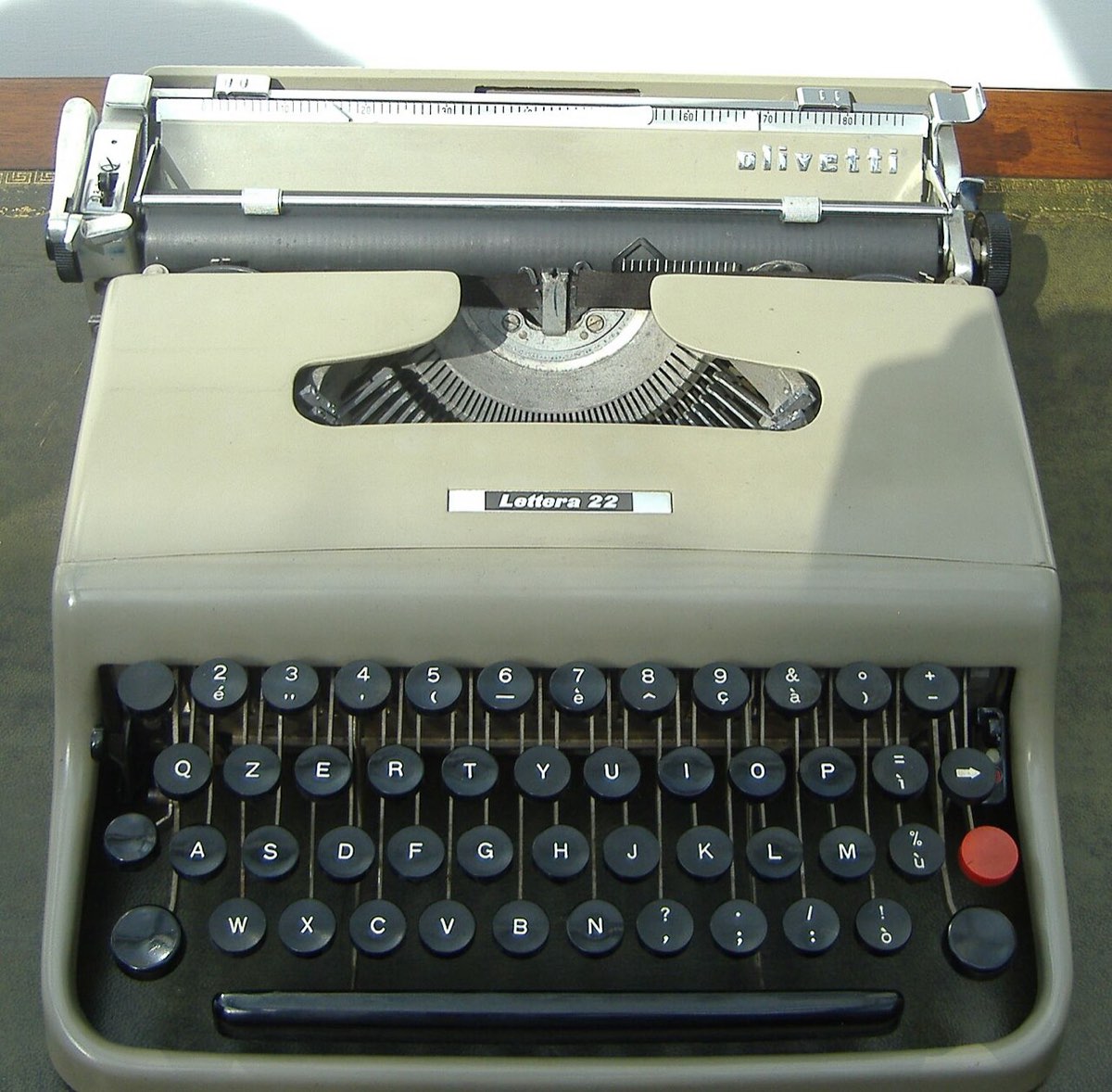
A low, flat portable typewriter in pale enamel
A mid-century portable typewriter of the kind carried by journalists and students. Credit: Matrobriva, via Wikimedia Commons, Public domain.

1960s: The typeball machine

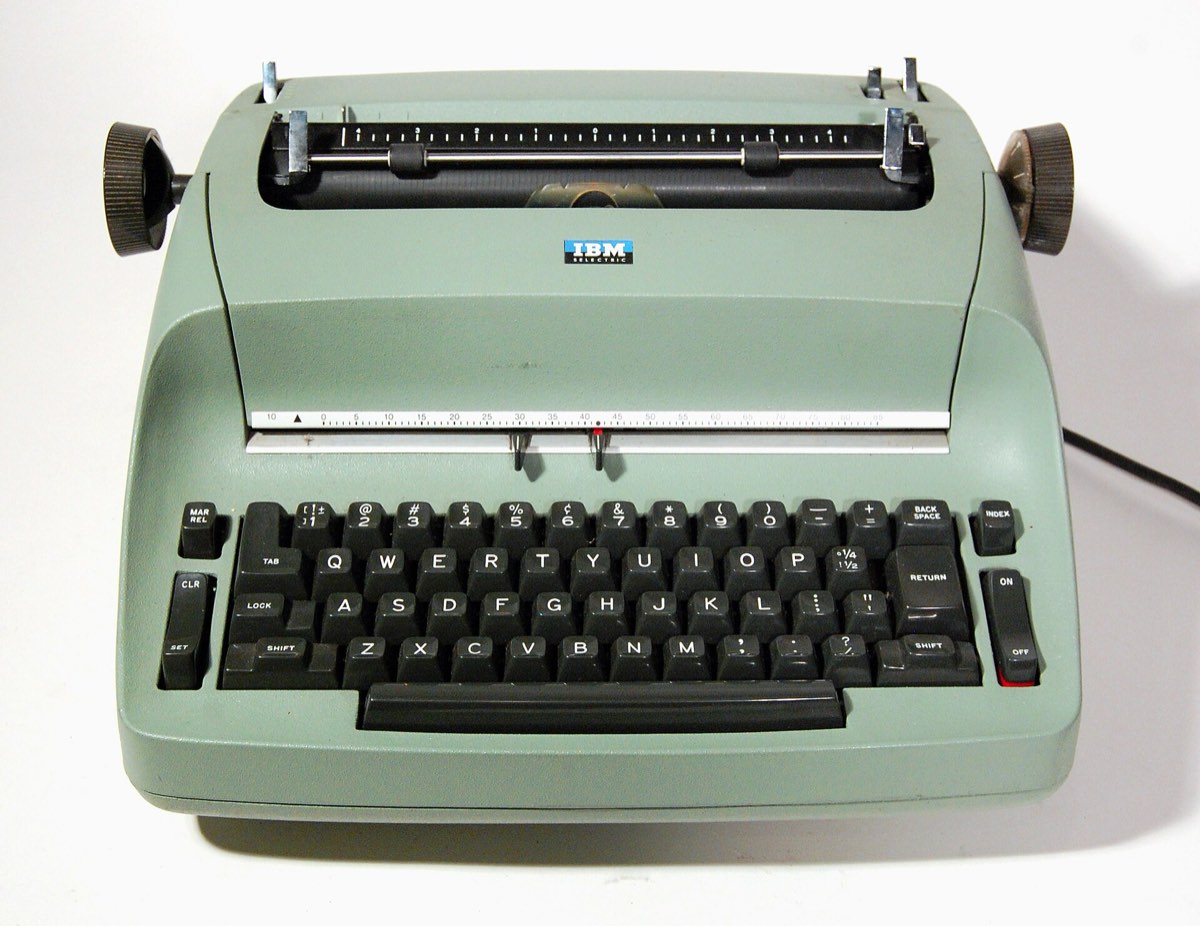
A wide electric typewriter with no moving carriage
An IBM Selectric. The carriage stands still and a ball of type travels along the line. Credit: steve lodefink, via Wikimedia Commons, CC BY 2.0.

1960s: The typeball

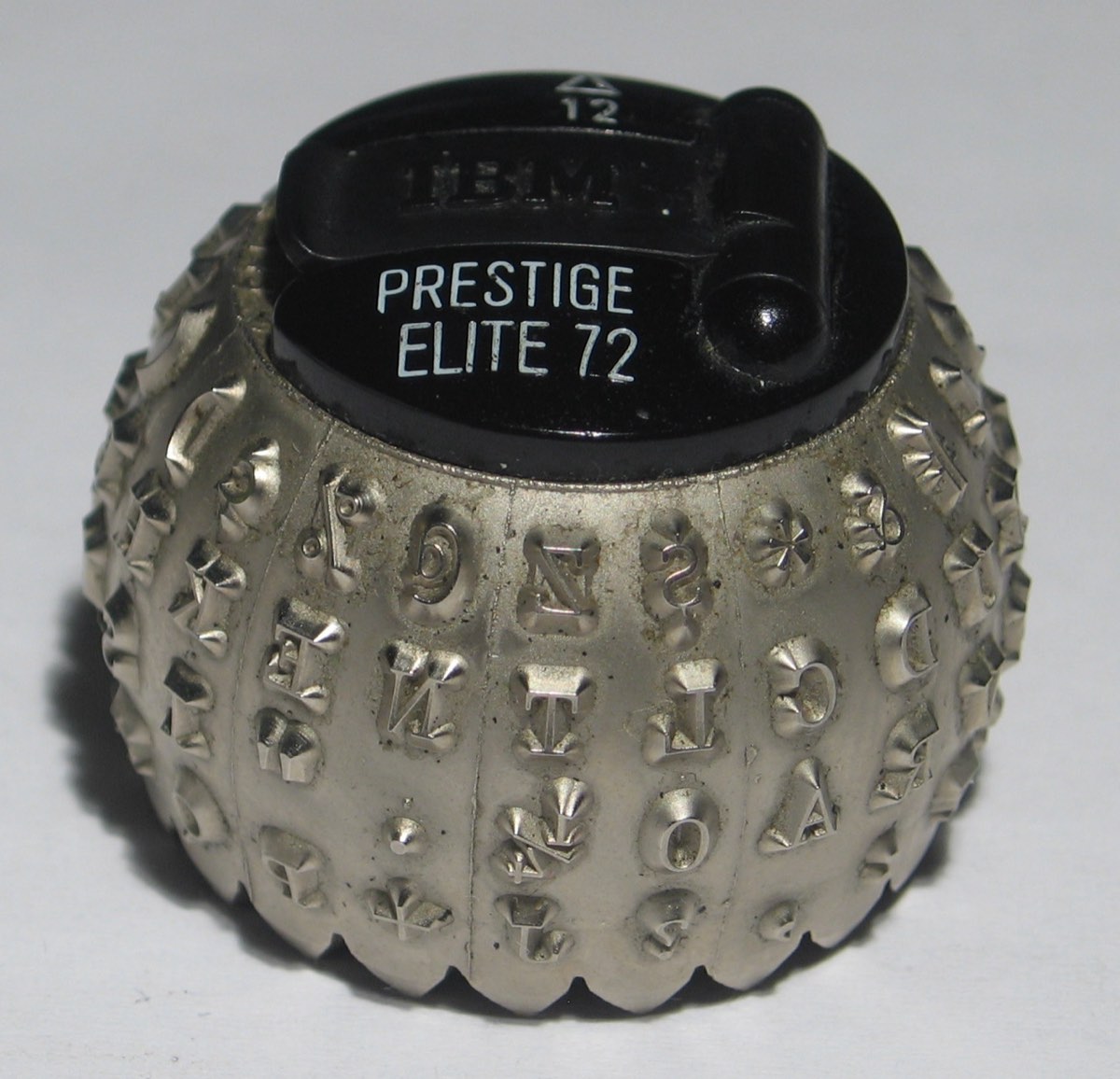
A metal sphere covered in raised letters
A Selectric typeball. The whole alphabet sits on one element that tilts and turns to print. Credit: Scs, via Wikimedia Commons, Public domain.

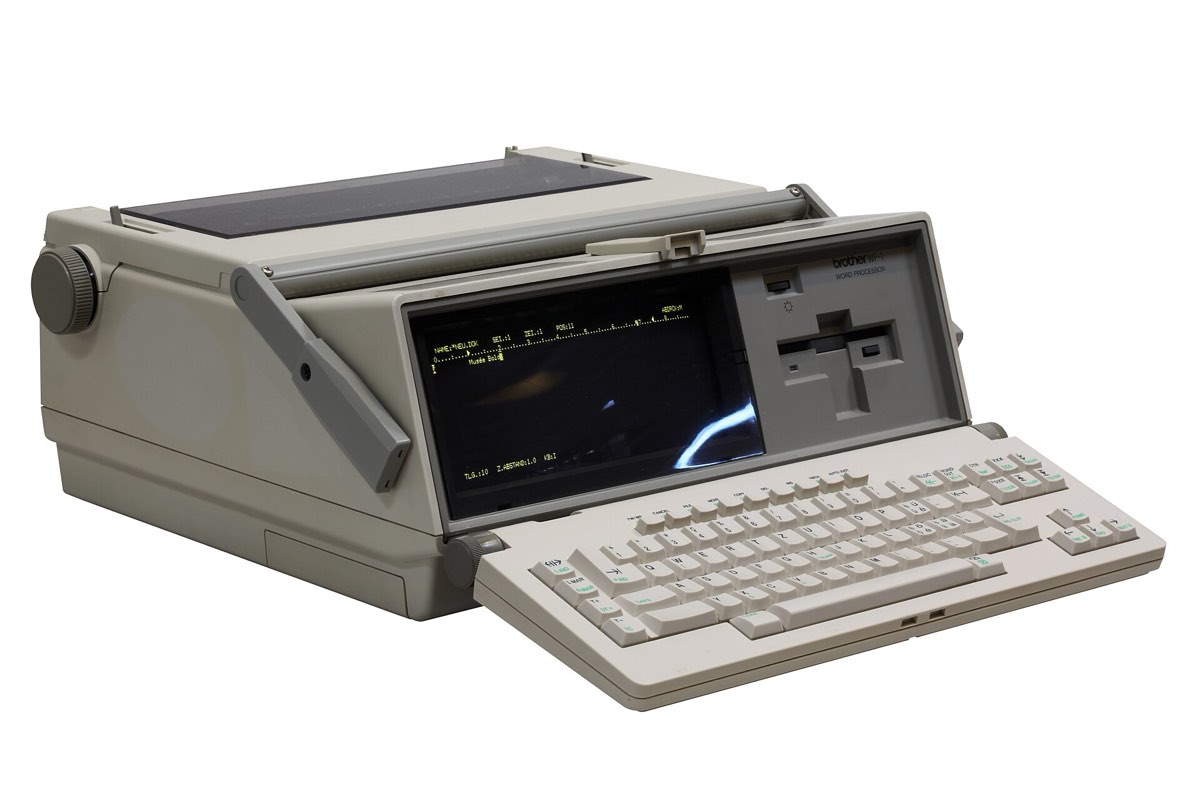
Electronic era: A typewriter with a screen

A beige electronic typewriter with a small built-in display
A Brother WP1 electronic typewriter on display at the Musée Bolo in Lausanne. Credit: Rama & Musée Bolo, via Wikimedia Commons, CC BY-SA 2.0 fr.

Typewriters for other scripts

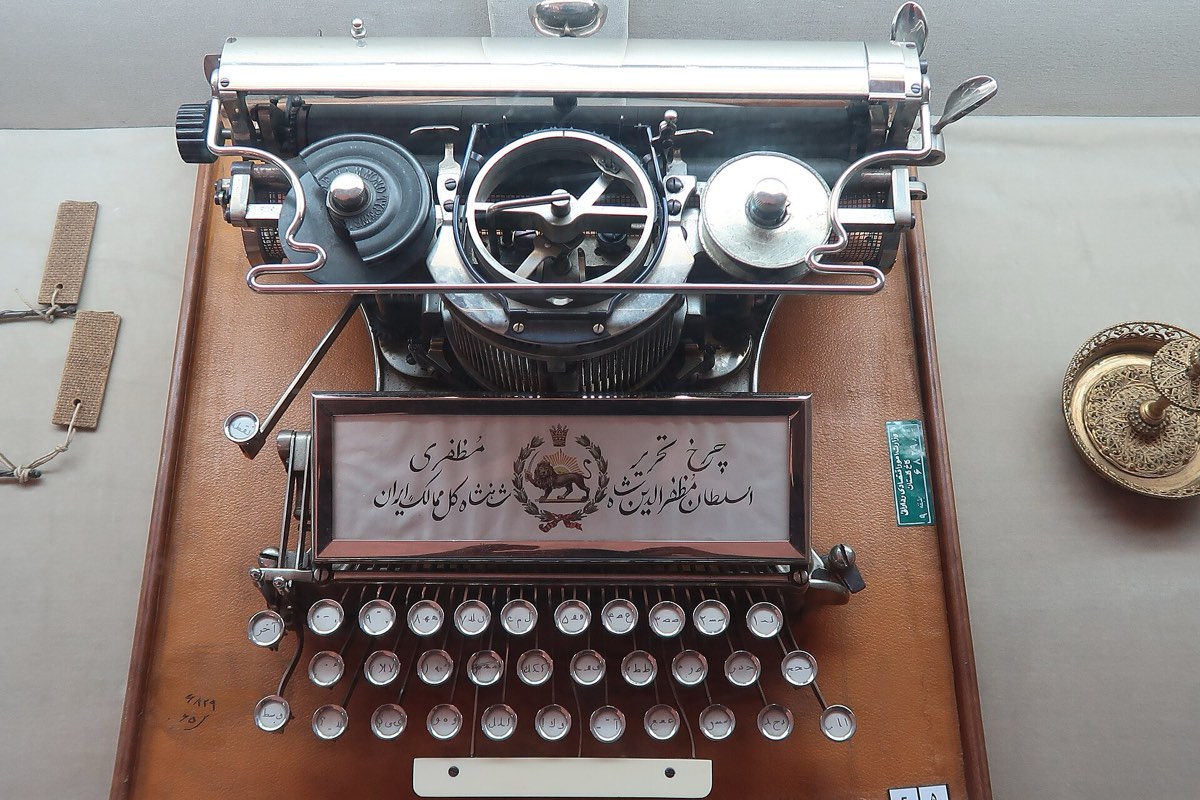
about 1900: A shah's typewriter

An old typewriter with Persian characters on its keys
A typewriter that belonged to Mozaffar ad-Din Shah Qajar of Persia. Credit: Nasser-sadeghi, via Wikimedia Commons, CC BY-SA 4.0.

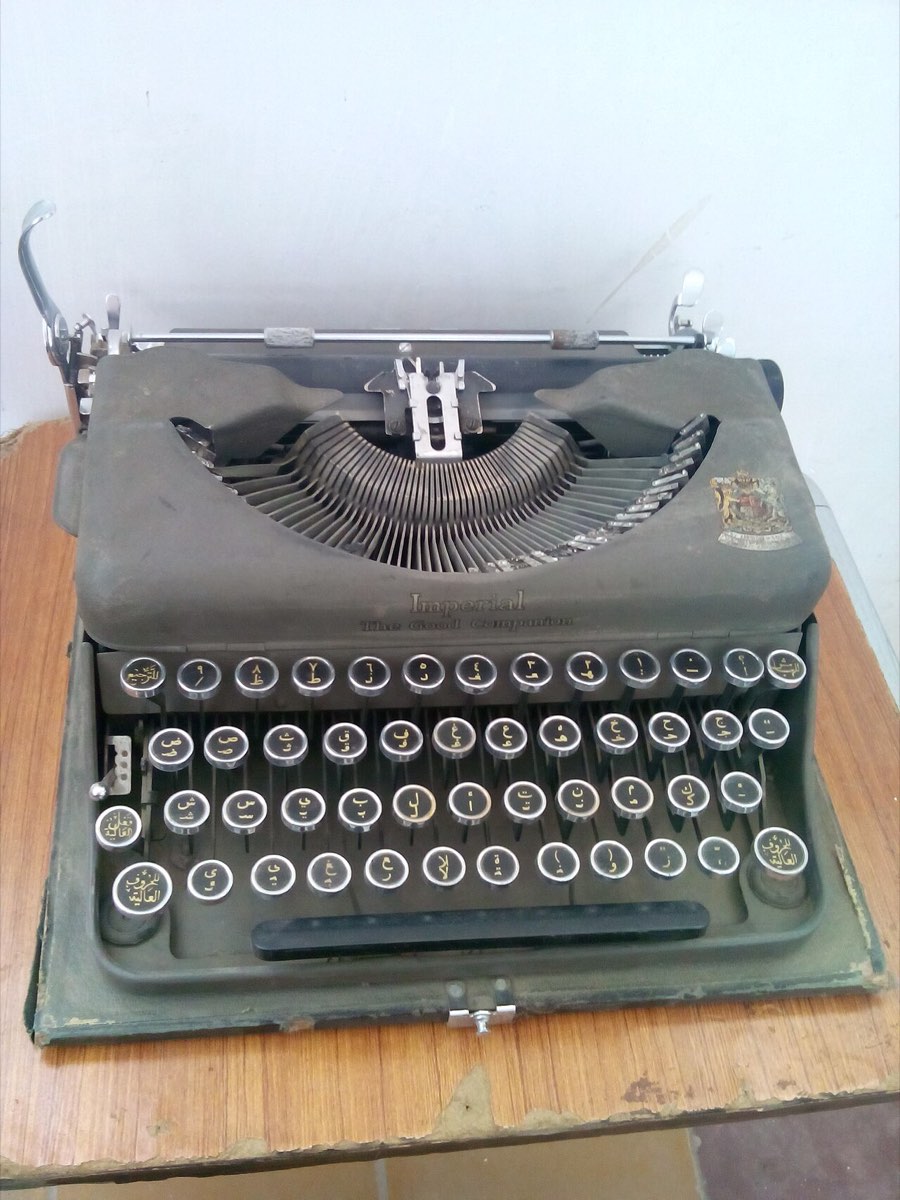
Undated: An Arabic typewriter

An old typewriter with Arabic characters on its keys
A typewriter built for Arabic, photographed in Baghdad. Credit: Usamasaad, via Wikimedia Commons, CC BY-SA 4.0.

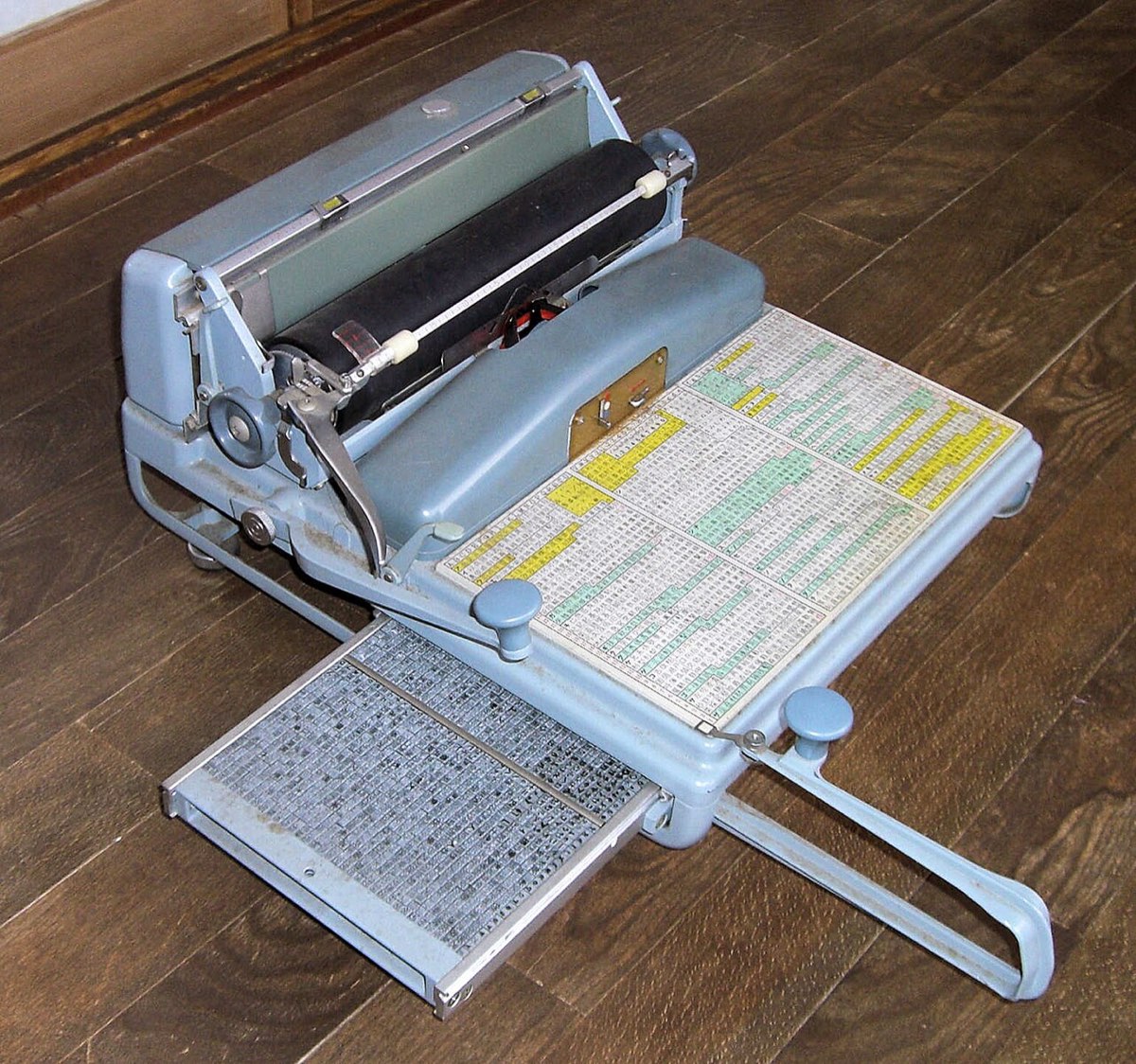
Undated: A Japanese typewriter

A machine with a large flat tray of small metal characters
A Japanese typewriter. The typist picks each character from a tray of type. Credit: miya, via Wikimedia Commons, CC BY 3.0.

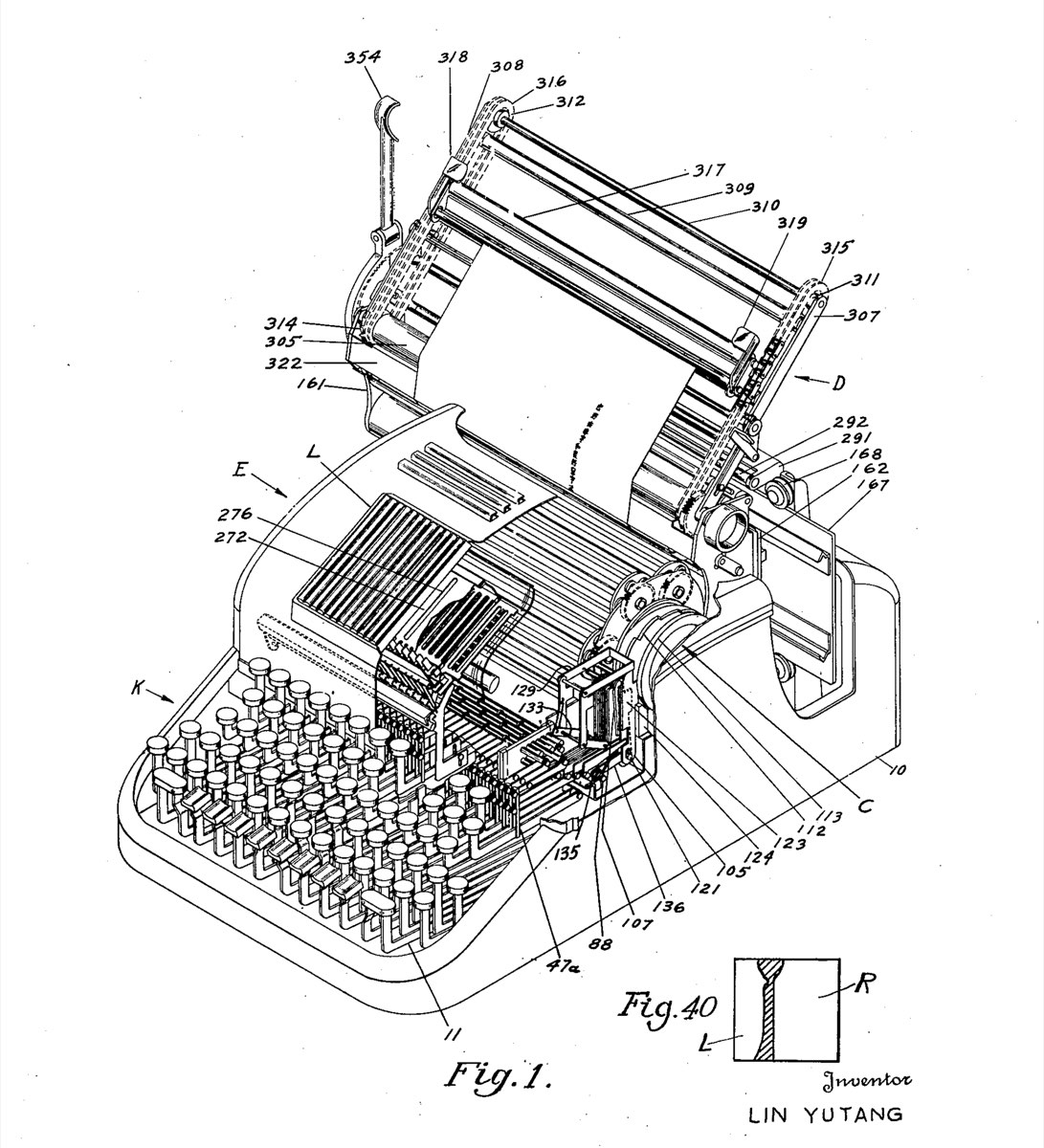
1952: The Ming Kwai patent

A patent drawing of a compact typewriter with a small keyboard
Lin Yutang's Ming Kwai Chinese typewriter as drawn in its United States patent of 1952. Credit: Campbell, Brumbaugh & Free, via Wikimedia Commons, Public domain.

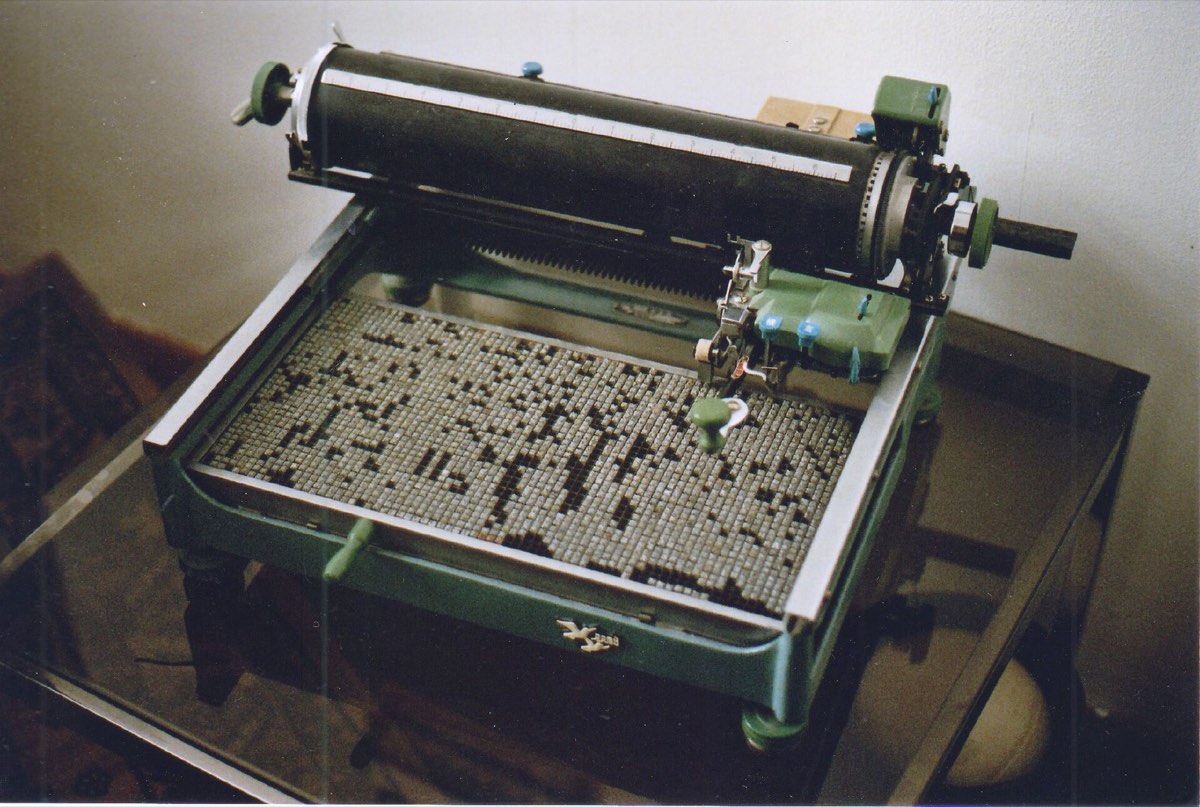
1970s: A Chinese typewriter

A typewriter with a wide tray holding thousands of characters
A Double Pigeon Chinese typewriter, probably from the 1970s, at the Institute of Sinology of Munich University. Credit: Dadiolli / Tilman Schalmey, via Wikimedia Commons, CC BY-SA 3.0.

Try one yourself

None of these machines is easy to borrow, but the motions are the same on the online typewriter: strike a key, hear the bell near the margin, return the carriage. The typing test runs on the same machine if you want to know how you would have done in a 1954 championship hall.

About the pictures

The pictures are reproduced under the licence named in each credit line. Pictures marked CC BY or CC BY-SA remain under that licence here; follow the link in the credit to the source record for the full terms. Dates given as "about" or "undated" are those of the source record.
Questions people ask

What did the first typewriters look like?
The earliest machines looked nothing like each other. Peter Mitterhofer built his from wood in the 1860s, Rasmus Malling-Hansen put the keys on a brass dome, and the Sholes and Glidden of 1874 was mounted like a sewing machine and decorated with painted flowers.
What is an index typewriter?
An index typewriter has no keyboard. The typist moves a pointer or a dial to a letter on a chart and then presses a single lever to print it. Index machines were cheaper and slower than keyboard machines and were sold from the 1880s into the 1920s.
When did typewriters start to look the way we picture them?
With the front-strike design of the 1890s, where the typebars swing up to the front of the platen and the typed line stays in view. The Underwood 1 of 1896 is the usual example, and most office machines after it followed the same layout.
Where do these pictures come from?
From museum collections, national archives and private collections that have released their photographs under free licences or into the public domain. Each picture is credited under its caption, with a link to its source record.