What is a good typing speed? WPM explained
A good typing speed is about 50 words per minute with few errors. See how WPM is calculated, what the largest studies found, and what makes you faster.
For everyday work, a good typing speed is about 50 words per minute with very few errors. That is close to the average in the largest keyboard study published so far, in which 168,960 volunteers averaged just under 52. A speed of about 78 put a typist in the fastest tenth of that group. Accuracy matters as much as the number: a fast score full of errors is not a good one.
How words per minute is calculated
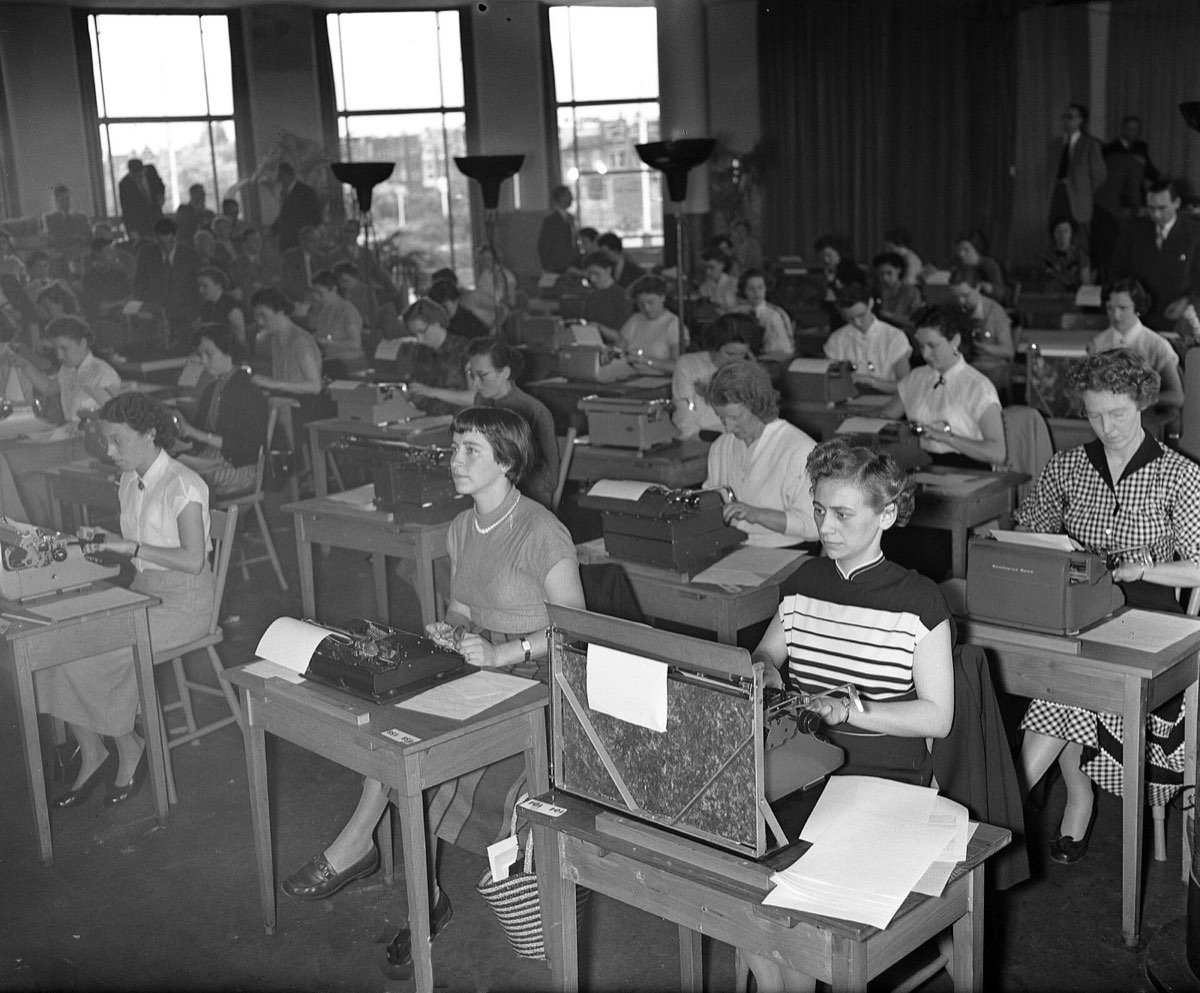
A "word" in a typing test is not a dictionary word. It is five keystrokes, and spaces and punctuation count. The convention lets a passage of short words and a passage of long ones be scored on the same scale. The researchers behind the large study above used the same rule: one word is any five characters.
If you type 260 characters in one minute, your speed is 260 divided by 5, which is 52 words per minute. "Typewriter" counts as two words. "I am", with its space, counts as less than one.
Gross speed and net speed
Gross speed counts everything you typed, mistakes included. Net speed takes the errors back out. The usual convention is:
- Gross speed: all keystrokes, divided by five, divided by the minutes typed.
- Net speed: gross speed minus the number of uncorrected errors per minute.
Type 300 characters in a minute and leave six mistakes on the page, and you have 60 gross and 54 net. Mistakes you went back and fixed are not subtracted, but fixing them has already cost you time.
Why your score changes from test to test
Three things move the number, none of them your fingers:
- Scoring. Some tests count only correctly typed words, and some will not let you continue until an error is fixed.
- Length. A one-minute score is usually higher than a speed you can hold for five minutes.
- Text. Plain sentences are faster to type than text full of numbers, capitals and symbols.
Compare your results on the same test over time, not across sites.
What the largest typing study found
In 2018, researchers at Aalto University in Finland and the University of Cambridge published an analysis of 136 million keystrokes from 168,960 volunteers. Each one transcribed 15 English sentences in a test the researchers ran with a typing-test website. It is the largest published study of keyboard typing that we could find.
| Measure | Result |
|---|---|
| Average speed | 51.56 words per minute |
| Slowest tenth of typists | Below about 26 |
| Fastest tenth of typists | Above about 78 |
| Fastest individuals | 120 or more |
| Errors left uncorrected | About 1.2% of characters, on average |
Read those figures with two cautions.
First, the volunteers chose to take a typing test, so they are people who care about typing. Their average age was 24.5, about 68 percent were in the United States, and 72 percent said they had taken a typing course. The wider public is probably slower, though the study cannot say by how much.
Second, the spread is wide. The standard deviation was about 20 words per minute, so speeds from the low 30s to the low 70s are all ordinary.
You will often see 40 words per minute quoted as the average. We could not trace that figure to a dataset of similar size, so treat it as a rule of thumb.
Phones are slower. A companion study of 37,370 volunteers measured an average of 36.2 words per minute on mobile devices.
Typical ranges for casual, office and professional typists
These bands are approximate. They are our reading of the study above and of the benchmarks later in this article, not an official scale.
| Words per minute | Rough label | What it rests on |
|---|---|---|
| Under 30 | Slow | The slowest tenth of the study typed below about 26 |
| 30 to 45 | Casual | 40 is the US federal standard for clerk-typists |
| 45 to 60 | Comfortable office speed | The study average was just under 52 |
| 60 to 80 | Fast, the range of trained professionals | Typewriter-era research on professional typists found about 60 to 75 |
| Over 80 | Very fast | The fastest tenth of the study began at about 78 |
Why accuracy matters more than raw speed
Every mistake costs more than one keystroke. To fix a wrong letter you press backspace and then the right key, so a single character takes three keystrokes.
In the Aalto data, 6.3 percent of all keypresses were backspace or delete. Among the fastest tenth of typists the share was 3.4 percent, and among the slowest tenth it was about 9 percent. The fast typists also left fewer errors behind. They were not better at correcting. They had less to correct.
Employers write accuracy into the requirement. The US government's qualification standard for clerical positions asks clerk-typists for 40 words per minute, based on "a 5 minute sample with three or fewer errors." Forty words a minute for five minutes is 1,000 keystrokes, so three errors means working at 99.7 percent accuracy.
Typing speeds on typewriters, and what employers asked for
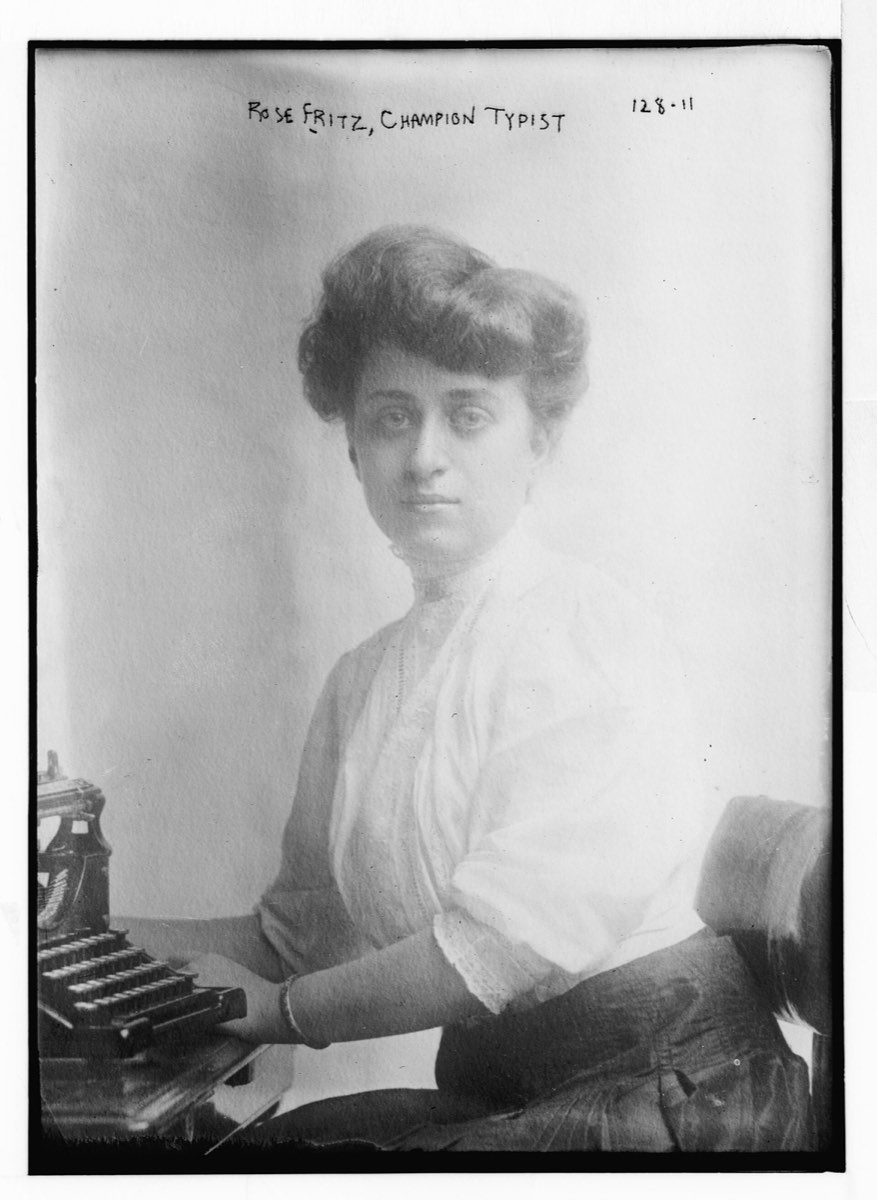
Much of the classic research on typing dates from the 1930s to the 1980s, and it mainly studied professional touch typists on mechanical or electric typewriters. The Aalto paper's review of that work puts their speeds at around 60 to 75 words per minute, well above today's average computer user.
Contest typists went much further. Albert Tangora is credited with averaging 147 words per minute for a full hour on a manual typewriter in October 1923, which is still cited as the record for a manual machine. After a rest, he is reported to have typed 159 words in a one-minute sprint.
Scoring was revised in 1924. Under the later rules his best hour was 142 words per minute in 1941, when he finished second to a typist on an electric machine. Guinness World Records lists Stella Pajunas at 216 words in a minute on an IBM machine in 1946.
On hiring standards, the firmest figure we can verify is the federal one above: 40 words per minute for clerk-typists, and 20 to 25 for data transcribers depending on grade. We could not find reliable primary sources for what typing pools required in earlier decades, so no older hiring figures are quoted here.
What improves typing speed
Consistent fingers matter more than ten fingers
Formal touch typing helps less than its reputation suggests. In the 2018 data, people who had taken a typing course averaged about 54 words per minute against 49 for those who had not. A 2016 motion-capture study of 30 typists, also from Aalto, found that self-taught typists using about six fingers were as fast on average as trained touch typists.
What the fast typists in that study shared was consistency. They pressed each key with the same finger every time, and their hands stayed in place instead of traveling across the keyboard. A typing course is one way to build those habits, not the only one.
More fingers still help on average. In the 2018 study the fastest tenth reported using about eight fingers, and the slowest tenth about five.
Keep your eyes on the text
In the 2016 study, untrained typists spent about twice as much time looking at their fingers as trained typists did. It did not cost them speed when copying simple sentences, but the researchers noted that it can slow down more complex editing work, where you need to watch the screen.
Get accurate first, then push the pace
Slow down until mistakes are rare, then raise the speed on purpose. A 2007 study of 60 university students with years of typing behind them found the highest speeds among those who had attended a typing class and who also made a point of typing quickly in everyday use.
Practice in short, regular sessions
A 1978 study of British postal workers learning to type compared four schedules. The group that trained for one hour a day learned in fewer hours of practice than the group that did two two-hour sessions a day. It took them more days on the calendar and fewer hours at the keyboard.
A routine that follows from all this:
- Take a one-minute typing test and write down your net speed and accuracy.
- Practice for a short session each day at a pace where mistakes are rare.
- Keep your eyes on the text, not on your hands.
- Retest each week on the same typing test so the numbers are comparable.
Why a typewriter simulator is a different challenge
A text box forgives everything. A typewriter does not, and practicing on one tests habits that an ordinary speed test never touches.
- Nothing deletes. On a manual machine, Backspace moves the carriage back one space and the ink stays where it struck. You can type over a mistake, but you cannot remove it.
- Rhythm matters. Fast computer typists press the next key before releasing the last one. In the 2018 study that was about half of all keystrokes among the fastest tenth, against under 8 percent among the slowest. A manual typewriter punishes the habit: two typebars sent to the paper too close together can collide and jam, so an even beat works better than bursts.
- The line must be returned. There is no word wrap. A bell rings a few characters before the right margin, and you finish the word and send the carriage back by hand.
Typebar is a free typewriter simulator that runs in the browser, with struck ink, a moving carriage, the bell and the return lever. Its authentic mode keeps these rules, and an easy mode relaxes them. Its typing games put speed and accuracy on that machine instead of in a plain text box. Your score may be lower there than on an ordinary test, but the habits it rewards are the ones that raise any score: accuracy before speed, and a steady rhythm.
Questions people ask
- What is the average typing speed?
- In the largest published study, 168,960 volunteers averaged 51.56 words per minute, almost all of them on desktop or laptop keyboards. They were recruited through a typing-test website, so the general public is probably somewhat slower. On phones, a companion study measured an average of 36.2 words per minute.
- Is 40 words per minute a good typing speed?
- It is enough for most everyday work, and it is the speed the US federal government requires of clerk-typists, measured over five minutes with three or fewer errors. It is below the average of about 52 words per minute recorded among volunteers in the 2018 Aalto and Cambridge study.
- How is words per minute calculated?
- Count every keystroke, including spaces and punctuation, divide by five, then divide by the number of minutes you typed. That is gross speed. Net speed subtracts the errors you left uncorrected, counted per minute.
- Do you need to touch type with ten fingers to type fast?
- No. A 2016 motion-capture study at Aalto University found that self-taught typists using about six fingers were as fast on average as trained touch typists. What the fast typists shared was pressing each key with the same finger every time and keeping their hands still.
- What is the fastest typing speed on a manual typewriter?
- Albert Tangora is credited with averaging 147 words per minute for one hour in October 1923, which is still cited as the record for a manual machine. Contest scoring was revised the following year, so the figure is not strictly comparable with later results.